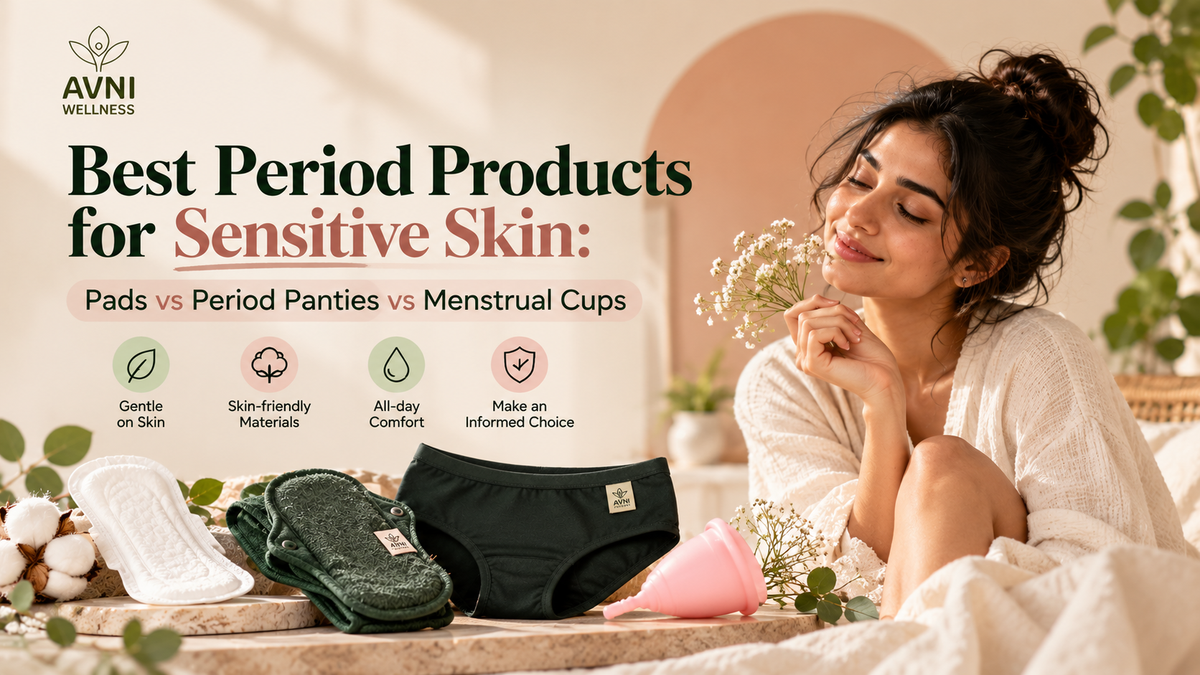
Best Period Products for Sensitive Skin: Pads vs Period Panties vs Menstrual Cups
Itching, chafing, redness or discomfort during your period can make choosing a menstrual product difficult. You might switch to cotton pads, try reusable period panties or consider a menstrual cup, only to discover that the discomfort continues.
The reason is that sensitive-skin menstrual care is not just about choosing the right material. It also involves friction, fit, moisture, wear time and product maintenance.
Women switching to reusable products should not assume they can immediately stop using all their existing products or expect a reusable product to provide unlimited absorption. The transition needs to account for individual comfort, correct use and washing.
Which period product is best for sensitive skin?
There is no single menstrual product that is best for everyone with sensitive skin. Start by identifying where irritation occurs and which product-related factors might be contributing to it.
|
If your priority is… |
What to consider |
|
Disposable protection with minimal maintenance |
An unscented pad with clearly disclosed skin-contact materials |
|
Reusable external protection |
A reusable cloth pad with a suitable contact layer and a washing routine you can follow |
|
Underwear-style protection |
Period panties with a comfortable fit and clear material and care information |
|
Avoiding continuous external pad contact |
A menstrual cup, if you are comfortable with insertion, removal and cleaning |
|
Reducing irritation associated with rubbing |
Fit, product movement, seams and friction |
|
Switching to reusable products |
First-use washing, appropriate detergent, thorough rinsing and complete drying |
Why do period products irritate sensitive skin?
Itching, irritation, chafing and dryness are among the concerns identified by the expert interviewed for this article. Infections can also cause genital discomfort, but they should not automatically be attributed to a menstrual product.
Several product-related factors deserve attention.
1. Friction: Is the product rubbing against your skin?
Friction can become an important consideration when a pad shifts, underwear fits poorly or a product repeatedly rubs against the same area.
Check whether:
-
The pad moves when you walk or exercise.
-
Its edges rub against your inner thighs.
-
Your underwear or period panties feel too tight.
-
Discomfort becomes more noticeable during movement.
If irritation appears in areas where the product repeatedly rubs, reassess its fit and positioning rather than changing material alone.
2. Material: What actually touches your skin?
The material that contacts your skin is more informative than a broad claim about the product. A pad may have a cotton top layer but contain other materials in its absorbent core or backing. Similarly, period panties may combine several fabrics to manage absorption, fit and moisture. The expert interviewed for this article places particular importance on the organic-cotton top layer for people concerned about skin sensitivity. That is a useful factor to investigate, but organic cotton is not a guarantee that irritation will never occur. Fit, friction, moisture and individual sensitivity still matter.
3. Moisture: How does the product manage menstrual fluid?
Absorbency and skin comfort are related, but they are not identical. A product may hold menstrual fluid while still feeling damp against the skin. The experience depends on its construction, how it moves fluid, how much it holds and how long it has been worn.
When evaluating a product, consider:
-
Whether the skin-contact surface feels persistently damp.
-
Whether discomfort develops after several hours.
-
Whether the product is suitable for your flow.
-
Whether you are changing or replacing it according to the manufacturer's instructions.
A product's absorbency rating alone cannot tell you how comfortable it will feel throughout wear.
4. Fragrance and other product components
Fragrances, adhesives and other product components may be relevant if irritation occurs consistently with a particular product.
This does not mean every fragrance or adhesive will irritate every person. Instead, look for a pattern: does the discomfort recur with one product but not another?
For someone who already knows they react to fragrance, an unscented alternative may be worth considering.
5. Fit and wear time
A product can be made from a material you tolerate and still cause discomfort if it does not fit properly or is worn longer than recommended.
For period panties, check the size, leg openings and how the garment sits against the body. For pads, check movement and coverage. For menstrual cups, correct size, positioning and individual comfort matter.
Do not extend wear time simply because a product is reusable or advertised as highly absorbent.
How to identify what may be causing your irritation
|
What you notice |
What to investigate |
|
Itching after using a particular pad |
Contact material, fragrance, adhesive and moisture |
|
Chafing while walking |
Fit, movement, friction and product edges |
|
Discomfort after several hours |
Moisture, capacity and wear time |
|
Irritation after switching to reusable products |
Detergent, rinsing, drying and first-use preparation |
|
Symptoms with only certain products |
Differences in construction or ingredients |
|
Symptoms that continue without product use |
Other possible causes requiring medical assessment |

These are clues, not diagnoses. Several factors can contribute to the same symptom, and a product change will not necessarily address every cause.
Organic cotton vs cotton vs synthetic materials: What matters?
Cotton identifies a fibre. Organic cotton refers to cotton produced under a specified organic standard. Synthetic fibres include manufactured materials used for different functions within a product. The important synthetic fibres include manufactured material used for different functions within a product. The important questions is not simply whether a product contains cotton. It is where that material is used and what actually touches your skin.
For example, a pad may advertise a cotton top layer without being entirely cotton. A period panty may have one fabric against the skin and a different construction in its absorbent layers.
When comparing products, look for:
-
The material of the skin-contact layer.
-
Information about the absorbent core and backing.
-
Whether fragrance is added.
-
Relevant material certifications or testing information.
-
Clear care and washing instructions.
The expert interviewed for this article considers the organic-cotton top layer particularly important. Treat this as an expert's product-selection perspective, not proof that organic cotton will prevent irritation for every user.
Are “natural,” “chemical-free” and “rash-free” menstrual products better?
These claims can sound reassuring, but they do not tell you everything you need to know. The expert identified “natural” as the most misunderstood claim among consumers. A product described as natural may still contain multiple materials, adhesives, fragrances or other components. Likewise, “organic” does not automatically mean irritation-free, and “rash-free” should not be treated as a guarantee for every individual.
Rather than relying on one marketing phrase, ask:
-
What material touches the skin?
-
Is the product scented?
-
What is disclosed about its absorbent layers?
-
Are the relevant materials or ingredients clearly identified?
-
Are testing or certification claims supported by specific information?
-
What washing and wear instructions apply?
“Chemical-free” is also not a scientifically precise way to describe a material. A more useful assessment looks at the actual composition, product construction and relevant safety information.A transparent product description is more useful than a broad promise that a product is natural or irritation-free.
Disposable pads vs reusable cloth pads for sensitive skin
Both provide external menstrual protection, but their maintenance requirements differ.
|
Factor |
Disposable pad |
Reusable cloth pad |
|
Contact |
External |
External |
|
Reusable |
No |
Yes |
|
Washing required |
No |
Yes |
|
Adhesive |
Product-specific |
Product-specific |
|
Skin-contact material |
Check product details |
Check product details |
|
Detergent exposure |
No washing detergent required |
Yes |
|
Ongoing maintenance |
Replace after use |
Wash, rinse and dry correctly |
When should you consider disposable pads?
Disposable pads may be more practical if you do not want to wash menstrual products, have limited access to washing facilities or prefer a simpler maintenance routine.
If you are sensitive to a particular pad, check its contact layer, fragrance and fit rather than assuming every disposable pad will cause the same reaction.
When should you consider reusable cloth pads?
Reusable pads may suit you if you prefer reusable external protection and can consistently follow the washing and drying instructions.
However, switching to reusable products introduces another factor to consider: the care routine itself.
A reusable pad that fits well and uses a suitable material may still become uncomfortable if it is not rinsed properly, is worn while damp or is not completely dry before reuse.
Reusable does not automatically mean irritation-free.
Are period panties good for sensitive skin?
Period panties offer underwear-style menstrual protection. They can be an option for people who prefer not to position a separate pad, but their suitability depends on construction, fit and maintenance.
Evaluate five things.
-
Skin-contact layer: Identify the fabric that touches your skin rather than relying only on the product's headline material claim.
-
Absorbent construction: Understand how the garment is designed to hold menstrual fluid. Do not assume every period panty has the same capacity.
-
Moisture management: Consider how the product feels during wear and whether it is appropriate for your flow.
-
Fit: A garment that is too tight or moves repeatedly may create friction and discomfort.
-
Washing: Follow the product's instructions, rinse thoroughly and ensure the garment is completely dry before wearing it again.
A mistake to avoid when switching to period panties
The expert highlighted three practical mistakes:
-
Stopping disposable products and switching completely to period panties without first understanding whether the new product suits your needs.
-
Expecting long absorption hours regardless of flow or product capacity.
-
Using the product without washing it before first use, where the manufacturer's instructions call for prewashing.
A more practical transition is to try the product under familiar conditions, follow its care instructions and assess comfort and performance before relying on it in every situation.
Are menstrual cups better for sensitive skin?
A menstrual cup collects menstrual fluid internally rather than absorbing it through an external pad or underwear layer.
For someone whose discomfort is associated with continuous external product contact, this difference may be worth considering. However, a menstrual cup introduces different requirements, including insertion, positioning, removal and cleaning.
|
Factor |
Menstrual cup |
External menstrual products |
|
Contact |
Internal |
External |
|
Insertion required |
Yes |
No |
|
Absorption |
Collects menstrual fluid |
Absorbs menstrual fluid |
|
Fit considerations |
Cup size, positioning and comfort |
Garment or pad fit and movement |
|
Cleaning |
Follow cup-specific instructions |
Disposable replacement or reusable-product washing |
|
Suitable for everyone? |
No |
No single format suits everyone |
A menstrual cup is not automatically better for sensitive skin. It changes the type of contact and the maintenance involved.
If you are uncomfortable with insertion or experience pain when using a cup, do not force yourself to continue. Consider another format and seek professional advice if pain or other symptoms persist.
What if sanitary pads give you rashes?
If irritation repeatedly follows the use of a particular pad, start by looking for patterns.
Step 1: Check the product. Review its contact material, fragrance information and other disclosed components.
Step 2: Check fit and friction. Look at whether the pad shifts, rubs against your skin or sits incorrectly.
Step 3: Check moisture and wear time. Make sure the product is appropriate for your flow and is changed according to its instructions.
Step 4: Consider a different format. Depending on your preferences, you could consider another disposable pad, a reusable cloth pad, period panties or a menstrual cup.
Step 5: Do not assume every rash is product irritation. If symptoms persist, recur, worsen or appear independently of menstrual-product use, seek medical evaluation.
You do not need to move through every product type in a fixed sequence. The objective is to identify what works for you without repeatedly exposing irritated skin to a suspected trigger.
Sensitive skin and heavy flow: What should you prioritise?
When sensitive skin and heavy menstrual flow occur together, choosing a product involves two separate questions:
-
What construction and contact materials are comfortable for your skin?
-
Can the product provide adequate protection for your flow?
The expert's practical advice is to consider material, absorbency, coverage and fit together.
|
Your preference |
What to evaluate |
|
Disposable protection |
Contact material, capacity, coverage and changing requirements |
|
Reusable external protection |
Contact material, absorbency, fit and washing routine |
|
Underwear-style protection |
Fit, capacity, moisture management and changing requirements |
|
Internal protection |
Cup capacity, fit, positioning and cleaning instructions |
A longer pad is not necessarily more absorbent simply because it is longer. Similarly, a thin product should not automatically be assumed to have low absorbency. Compare the manufacturer's actual product specifications rather than relying on appearance alone.
For heavy bleeding, needing to change products very frequently, bleeding through protection repeatedly or experiencing dizziness or unusual weakness warrants medical attention. Do not rely on a menstrual product change alone to address unusually heavy bleeding.
Sensitive skin overnight, at work and while travelling
Overnight
Consider contact material, moisture management, coverage, absorbency and fit. Choose a product with appropriate capacity and follow its recommended wear time. Do not assume that a longer product or a reusable product can safely be worn indefinitely.
At work or college
Prioritise comfort over several hours, sufficient capacity, portability and access to a clean replacement. Disposable pads may be simpler when washing facilities are unavailable; period panties may be practical if you can change and store used garments hygienically.
While travelling
Think about more than the product itself. Consider how many products you need, whether you can wash and dry reusable items, how you will store used products and whether you are comfortable inserting and cleaning a menstrual cup.
The most suitable option is the one that meets your protection needs and that you can use and maintain correctly.
How to wash reusable pads and period panties without increasing irritation
Washing is part of the product-selection decision, not an afterthought.
Follow the specific manufacturer's instructions. In general, pay attention to the following:
-
Wash before first use if instructed.
-
Use a detergent suitable for the product's fabric and care requirements.
-
Avoid using excessive detergent.
-
Rinse thoroughly to minimise residue.
-
Dry the product completely before reuse.
-
Store it only when fully dry.
The expert interviewed for this article specifically flagged detergent residue as a possible irritation concern and recommended a gentle liquid detergent.
That does not mean every detergent described as chemical-based will cause irritation. The more useful approach is to select a suitable detergent, follow the dosage instructions and rinse the garment thoroughly.
If irritation begins after switching to a reusable product, review both the product itself and the washing routine. If symptoms continue, do not assume detergent is the only possible cause.
Avni's period products: Which format should you consider?
Avni offers several menstrual-product formats. The best starting point is to match the format to your needs, then verify the product's material, construction, capacity and care instructions.
|
Your preference |
Avni product to explore |
|
Disposable external protection |
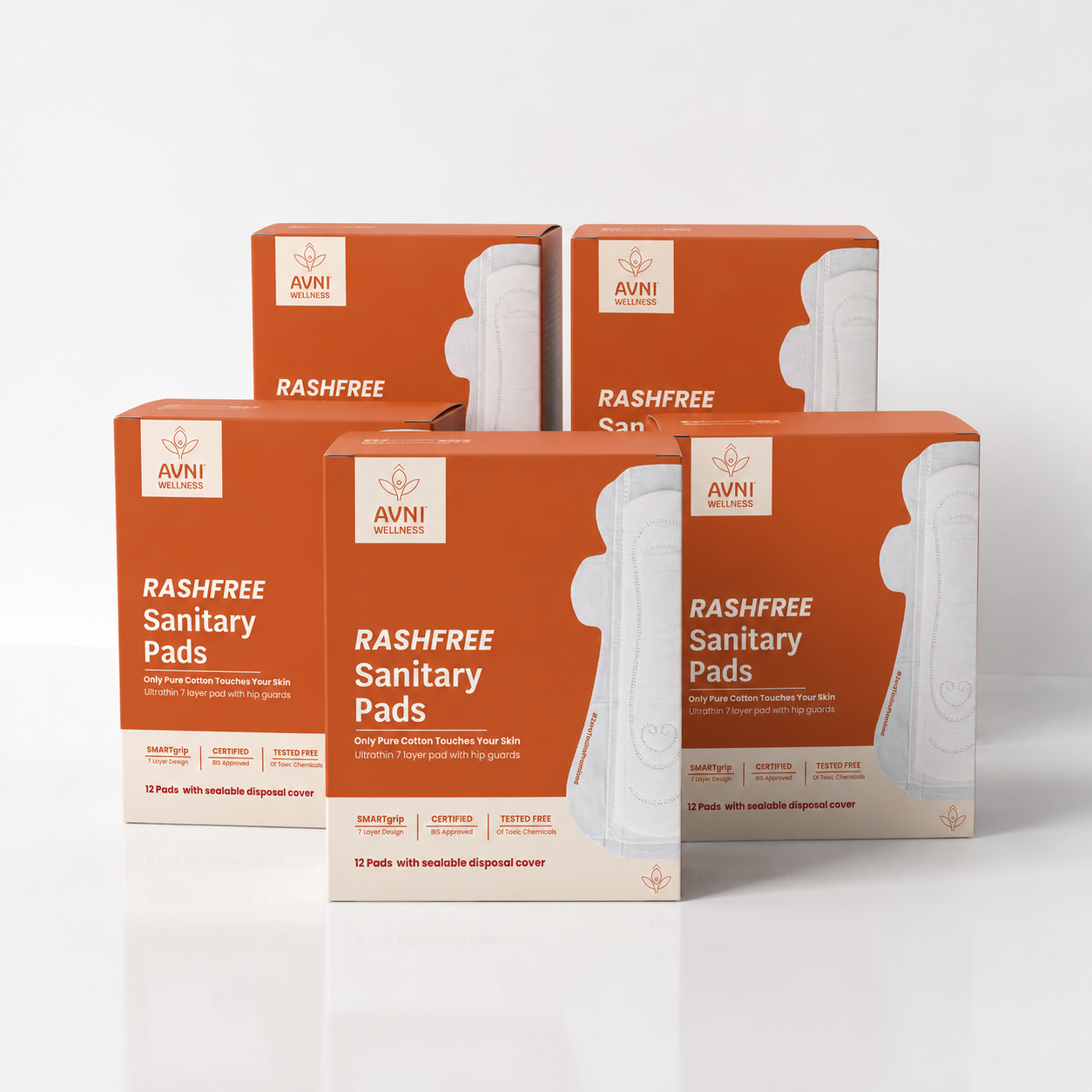
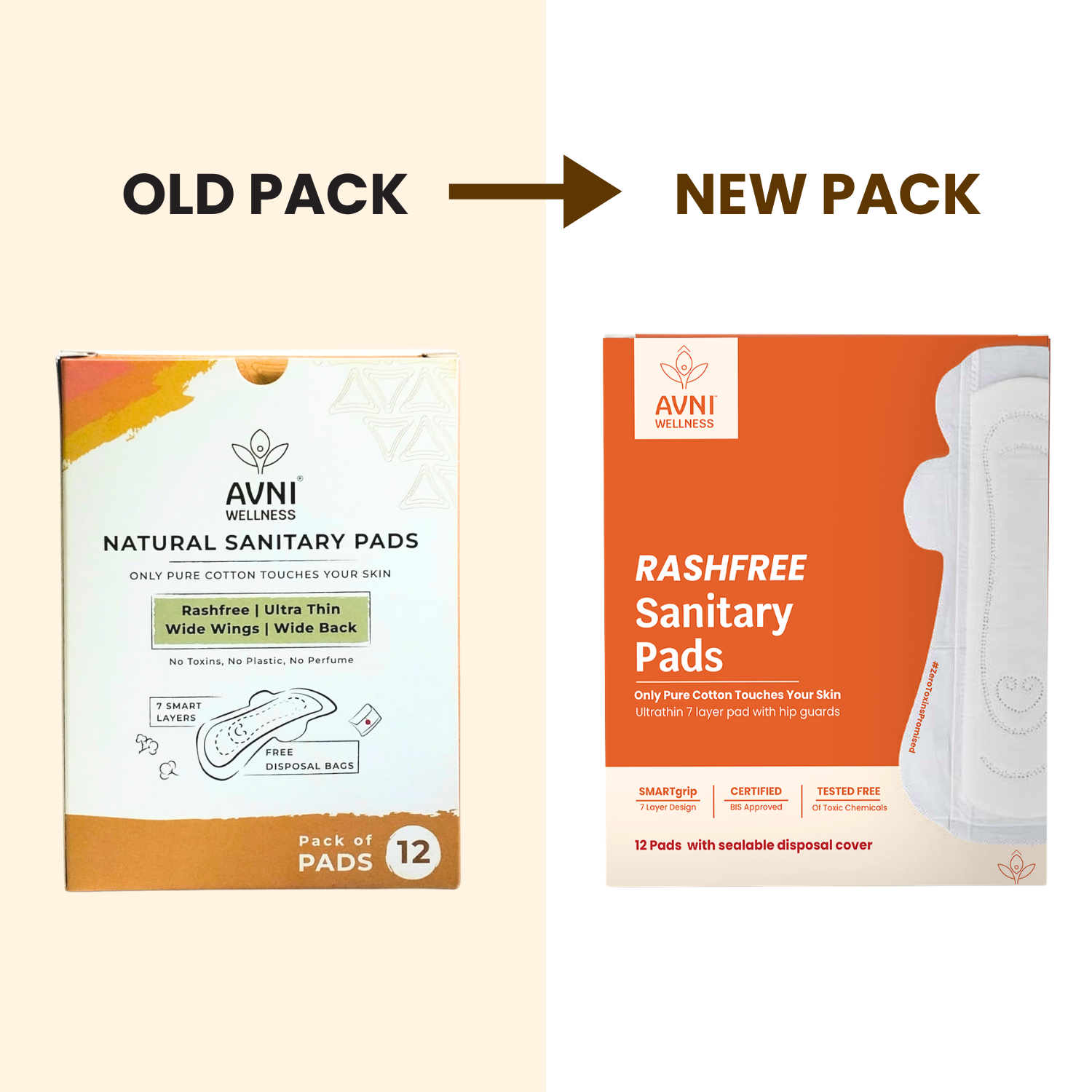
Rashfree Cotton Disposable Pads |
|
Reusable external protection |
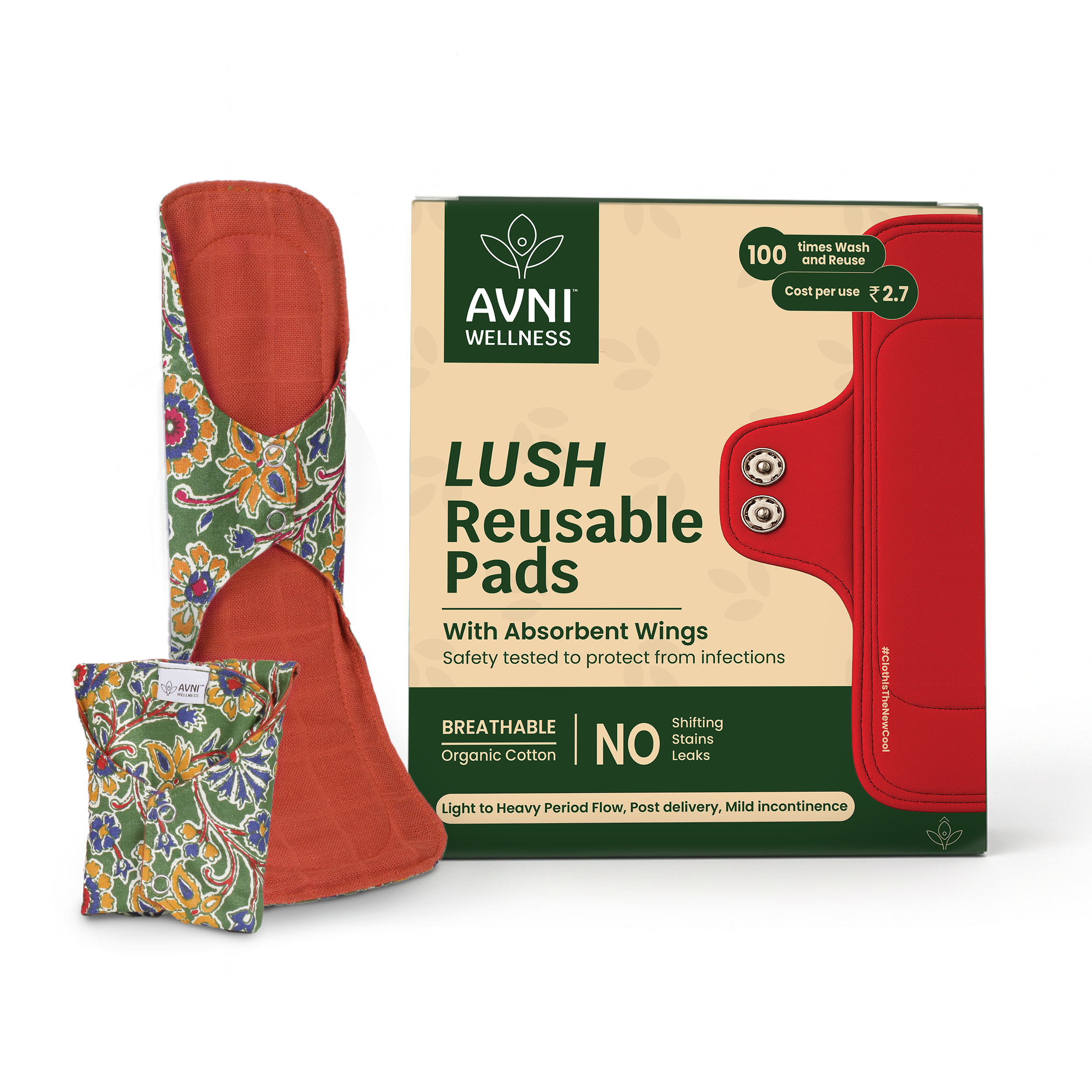
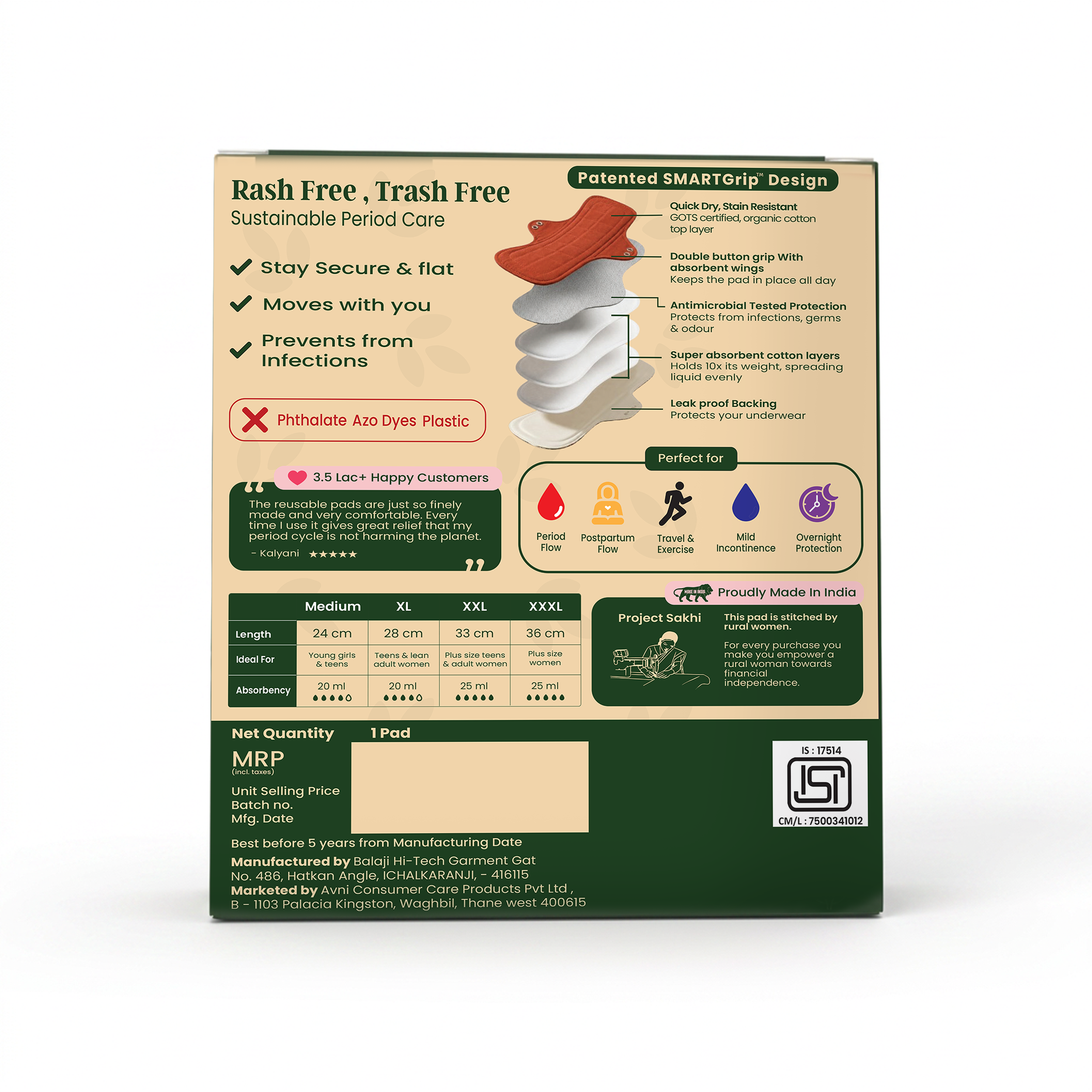
Lush Reusable Cloth Pads |
|
Underwear-style reusable protection |
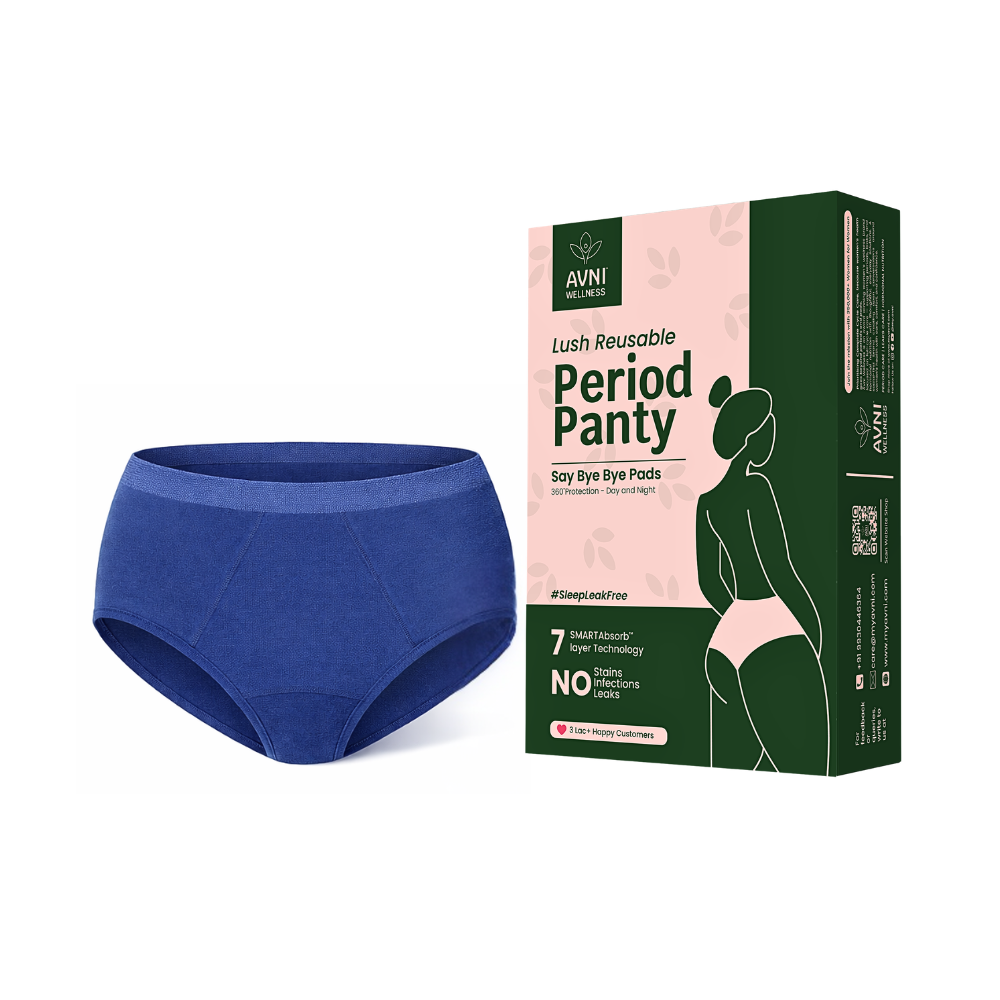
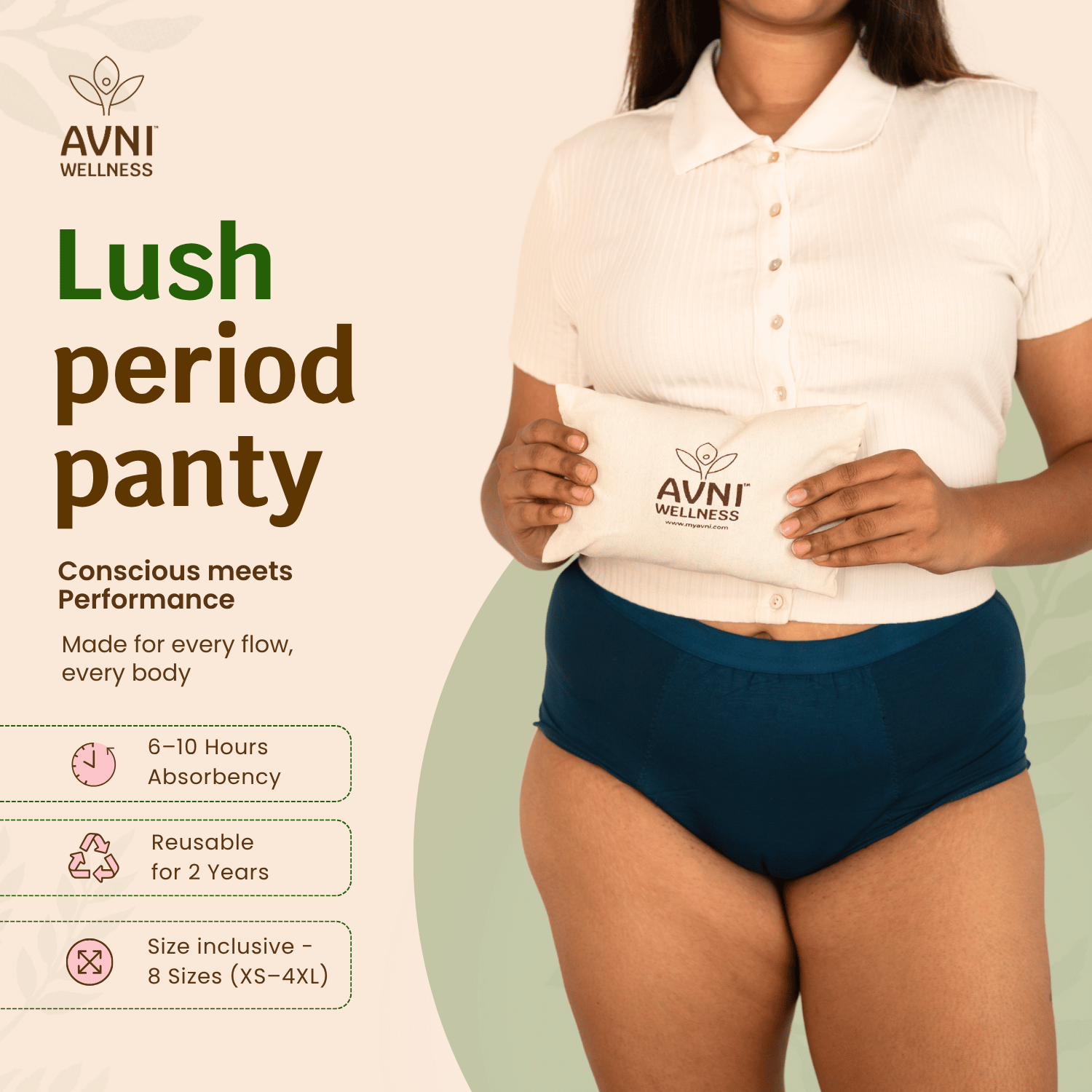
Lush Period Panty |
|
Internal reusable protection |
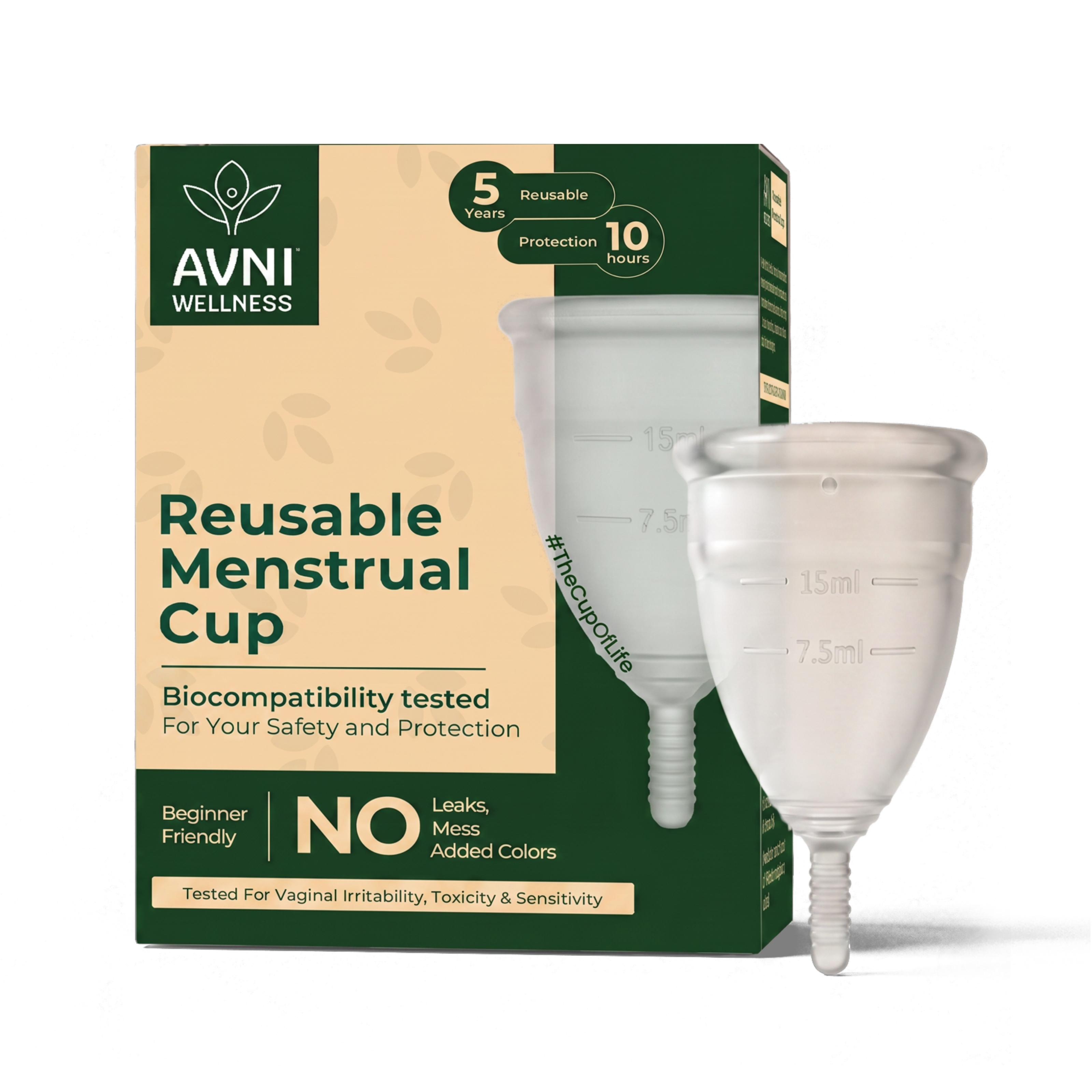
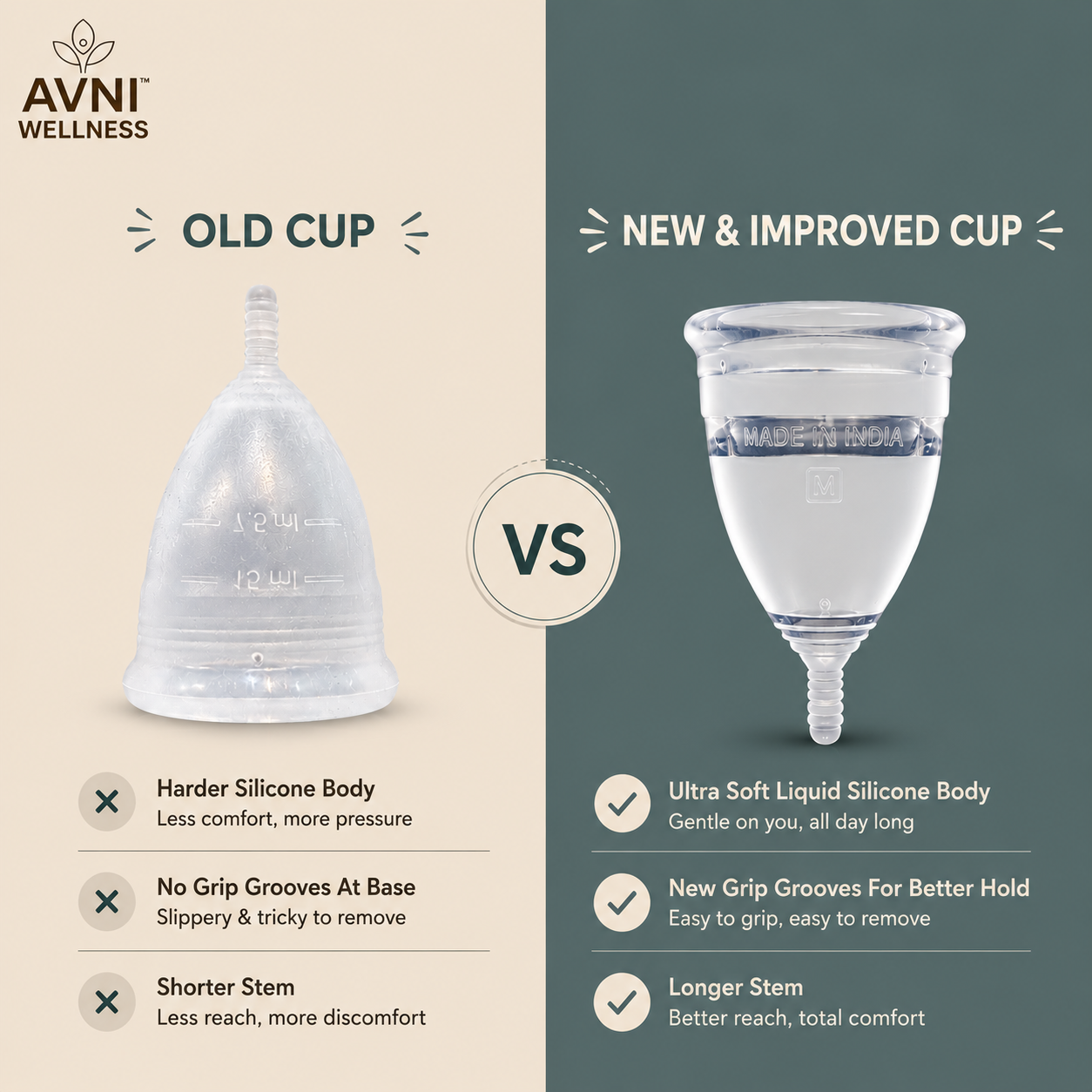
Avni Menstrual Cup |

Before choosing, review the current product page for the precise material specifications, recommended wear time, size guidance, cleaning instructions and any relevant testing information.
Common mistakes when choosing menstrual products for sensitive skin
Avoid these common assumptions:
-
Choosing only by the word “organic.” Check the skin-contact layer and the rest of the product construction.
-
Assuming cotton means the entire product is cotton. Check the material breakdown.
-
Ignoring friction. A suitable material may not compensate for poor fit or repeated rubbing.
-
Wearing a product longer than recommended. Reusability does not mean unlimited wear.
-
Switching to period panties without a transition plan. Test comfort and performance before relying on them in every situation.
-
Reusing products without proper washing and drying. Follow the manufacturer's care instructions.
-
Assuming every irritation is caused by a pad. Other skin or medical conditions may be responsible.
-
Treating “natural” or “rash-free” as proof. Look for specific, verifiable product information.
 View all


Leave a comment
This site is protected by hCaptcha and the hCaptcha Privacy Policy and Terms of Service apply.