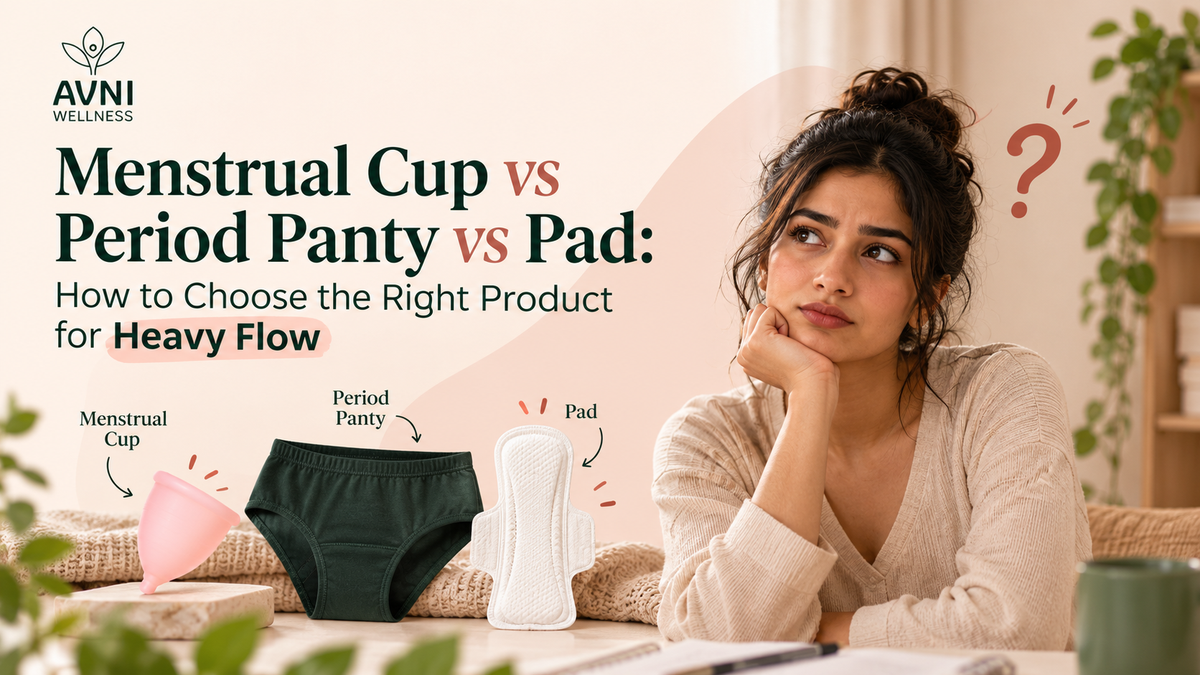
Menstrual Cup vs Period Panty vs Pad: How to Choose the Right Product for Heavy Flow
Heavy flow changes how you should choose a period product.
The question is not simply whether you should use a pad, period panty, or menstrual cup. The more useful question is:
Which product gives you enough absorbency or collection capacity, sufficient coverage, a reliable fit, and the right wear time for your actual flow and daily routine?
Disposable and reusable pads absorb menstrual blood externally. Period underwear uses absorbent fabric built into the underwear, while a menstrual cup collects menstrual blood internally rather than absorbing it.
For someone with heavy flow, the choice should be based on absorbency/capacity, coverage, fit, usage time, lifestyle, skin sensitivity, price, and personal preference.
How Should You Choose?
There is no single period product that is best for every woman with heavy flow.
Instead, start with these questions:
|
If your priority is... |
What to consider |
|
Sensitive skin and avoiding plastic |
Organic/cotton-based disposable or reusable pads, or period panties |
|
Long office or travel hours |
Menstrual cup or a suitable disposable pad, depending on preference and product capacity |
|
Home and overnight use |
Reusable pads or period panties |
|
Reusability |
Reusable pads, period panties or menstrual cup |
|
No insertion |
Pads or period panties |
|
Minimal product handling during the day |
Menstrual cup, subject to correct use and capacity |
|
Familiar and simple use |
Disposable pad |
|
Lower long-term purchasing frequency |
Reusable period products |
|
Personal comfort and preference |
Choose the format you are comfortable using |
The right choice is ultimately individual. NHS guidance similarly notes that pads, reusable pads, menstrual cups and period underwear can all be used, and that users should find the product that suits their body and lifestyle.
What Counts as Heavy Flow?
A practical sign of heavy menstrual bleeding is needing to change a pad or tampon every 1–2 hours, needing to use two period products together, bleeding through clothing or bedding, having periods lasting more than seven days, or passing large clots.
If heavy bleeding is regularly affecting daily activities, work, exercise or quality of life, it is worth discussing it with a healthcare professional rather than simply switching to a higher-absorbency product.
The 6 Factors That Should Determine Your Choice
For heavy flow, the product itself is only one part of the equation.
1. Absorbency or Collection Capacity
The first question is:
Can the product handle the amount of menstrual fluid you are actually producing before it needs to be changed or emptied?
Pads and period panties absorb menstrual fluid. Menstrual cups collect it.
A higher-capacity product can reduce the need for frequent changes, but maximum capacity does not mean every user can wear the product for the same length of time.
Your actual flow, product construction and manufacturer's usage instructions still matter.
2. Coverage
Coverage becomes particularly important when leakage occurs because blood moves beyond the absorbent area.
For heavy flow, consider:
-
Front coverage
-
Back coverage
-
Width
-
Wing design for pads
-
Full absorbent area in period underwear
-
Correct positioning of the product
The expert insight for this article is clear:
For overnight heavy flow, coverage, absorbency and fit are the three most important factors.
Length matters, but it is secondary to whether the product actually provides sufficient absorbency and coverage in the areas where leakage occurs.
3. Fit
A high-absorbency product can still leak if it does not fit correctly.
Fit matters because it affects:
-
Product movement
-
Contact with the body
-
Coverage
-
Positioning
-
Leakage around the edges
For period panties, this means choosing the correct size rather than simply choosing your usual underwear size.
For pads, positioning and underwear fit can affect whether the pad stays in place.
For menstrual cups, correct insertion and fit are important for creating an effective seal.
4. How Long You Need Protection
Your daily schedule should influence your choice.
If you are travelling or working long hours
A menstrual cup or suitable disposable pad may be more practical depending on your comfort, access to facilities, flow and the product's instructions.
If you are at home
Reusable pads and period panties can be convenient because you can change and wash them as required.
At night
Prioritize:
Coverage → Absorbency → Fit
rather than choosing a product simply because it is longer.
5. Skin Sensitivity and Material Preference
If you have sensitive skin or specifically want to avoid plastic-based products, material becomes an important selection factor.
Possible options include:
-
Organic/cotton-based disposable pads
-
Reusable cotton pads
-
Cotton-based period panties
-
Menstrual cups, if you are comfortable with internal use
The important distinction is that “natural” does not automatically mean suitable for every person. Look at the actual materials, construction and care instructions.
Reusable pads and period underwear can also be useful for people who dislike the adhesive or sensation of disposable pads. Some NHS guidance specifically notes reusable cotton/bamboo products as an option for people with sensitivities.
6. Personal Preference
The product has to be one you are actually comfortable using.
Ask yourself:
-
Am I comfortable with internal insertion?
-
Do I want something I can wash and reuse?
-
Do I prefer a familiar pad?
-
Do I want to avoid disposable products?
-
Do I have access to a private bathroom?
-
Can I wash reusable products?
-
Do I want to carry spare products?
-
What does my budget allow?
There is no benefit in choosing a product that looks ideal on paper but that you do not feel comfortable using.
Pad vs Period Panty vs Menstrual Cup for Heavy Flow
|
Factor |
Disposable Pad |
Reusable Pad |
Period Panty |
Menstrual Cup |
|
Protection type |
External absorption |
External absorption |
Integrated external absorption |
Internal collection |
|
Reusable |
No |
Yes |
Yes |
Yes |
|
Insertion required |
No |
No |
No |
Yes |
|
Washing required |
No |
Yes |
Yes |
Yes |
|
Absorbency/capacity |
Product-specific |
Product-specific |
Product-specific |
Product-specific |
|
Coverage |
Pad-specific |
Pad-specific |
Built into underwear |
Internal |
|
Fit importance |
High |
High |
High |
High |
|
Sensitive-skin option |
Cotton/organic options available |
Cotton options available |
Material-specific |
No external pad contact |
|
Travel convenience |
High |
Requires storage/washing |
Requires storage/washing |
Compact and reusable |
|
Overnight use |
Depends on coverage/capacity |
Depends on coverage/capacity |
Depends on coverage/capacity |
Depends on capacity and instructions |
|
Best for |
Familiar, quick external protection |
Reusable external protection |
Reusable underwear-style protection |
Reusable internal protection |

Which Product Makes Sense in Different Situations?
Heavy Flow + Sensitive Skin
If avoiding plastic or minimizing contact with disposable materials is important, consider:
Organic/cotton-based disposable pads → reusable cotton pads → period panties → menstrual cup
The final choice depends on whether you prefer external or internal protection and which materials you tolerate comfortably.
Heavy Flow + Long Office Hours
For a long workday, consider:
Menstrual cup
Useful if you are comfortable with insertion, removal and cleaning, and the product's capacity and usage instructions suit your flow.
Disposable pad
Useful if you prefer familiar external protection and need a product that can be quickly changed and disposed of.
Carry spare protection if your flow can exceed the expected wear time.
Heavy Flow + Travel
Travel changes the priorities.
A menstrual cup can reduce the number of individual products you need to carry because it is reusable.
Disposable pads can be simpler when access to washing facilities is limited.
The choice therefore depends on:
-
Trip duration
-
Bathroom access
-
Washing facilities
-
Personal comfort
-
Flow intensity
Heavy Flow + Home and Overnight
At home, reusable pads and period panties can be practical because washing and changing are easier to manage.
For overnight use, prioritize:
1. Coverage
2. Absorbency
3. Fit
Do not assume that the longest product automatically provides the greatest protection.
The 3 Most Important Factors for Overnight Heavy Flow
According to the expert insight collected for this article:
1. Coverage
The absorbent area needs to cover the areas where menstrual fluid is likely to reach, particularly when sleeping and moving.
2. Absorbency
The product must have enough absorbent capacity for your actual flow.
3. Fit
A product that shifts during sleep can create gaps even when the absorbent material itself has sufficient capacity.
What about length?
Length matters, but it is secondary to coverage, absorbency and fit.
A longer pad is not automatically a more absorbent pad.
Common Mistakes That Cause Heavy-Flow Leaks
Mistake 1: Using the Product Longer Than Recommended
One of the clearest causes of leakage is exceeding the product's recommended usage time or capacity.
As menstrual fluid accumulates, the product can reach its absorbency or collection limit.
Solution: Follow the manufacturer's usage instructions and change or empty the product when required by your flow and the product guidance.
Mistake 2: Choosing a Product That Is Not Designed for Your Flow
A light- or moderate-flow product cannot automatically be treated as a heavy-flow product.
Look at:
-
Absorbency
-
Capacity
-
Coverage
-
Product dimensions
-
Manufacturer's intended use
Mistake 3: Choosing the Wrong Fit
Incorrect sizing can cause:
-
Movement
-
Gaps
-
Poor positioning
-
Leakage around the edges
This is particularly important for period panties and menstrual cups.
Mistake 4: Not Washing Reusable Products Before First Use
If the manufacturer's care instructions recommend washing before first use, follow them.
For reusable pads and period panties, proper washing and drying are part of product care.
Mistake 5: Assuming Longer Means More Absorbent
A longer pad provides more length, but length alone does not determine absorbency.
A shorter product made with a highly absorbent material can potentially hold more fluid than a longer product made with a lower-absorbency construction.
Always look at the actual product specifications.
What Actually Determines High Absorbency?
One of the most useful expert insights for this article is that absorbency is not determined simply by how thick or long a product looks.
Important factors include:
Material
Cotton and other absorbent fibres can contribute to fluid uptake.
Fabric Construction
The structure and density of the absorbent material affect how fluid moves through and is retained within the product.
Technical Textile Design
Specially engineered absorbent textiles can be designed to hold substantially more fluid relative to their fabric weight.
The expert insight provided for this article specifically identifies technical textile designed to absorb up to 5× its fabric weight as one example.
This figure should be presented as a specific material/product claim only where the manufacturer or technical documentation supports it rather than as a universal property of all technical textiles.
Common Misconceptions About Heavy Flow
Myth 1: “Heavy flow means litres of blood.”
Not necessarily.
The amount of menstrual blood is much smaller than many people imagine. NHS guidance gives typical menstrual blood loss as approximately 20–90 mL while heavy menstrual bleeding is identified more practically through signs such as very frequent product changes, bleeding through clothing/bedding, prolonged bleeding or needing multiple products.
Myth 2: “Reusable pads and period panties cannot handle heavy flow.”
Reusable pads and period underwear are specifically designed in different absorbency levels. NHS sources describe reusable pads and period underwear as absorbent menstrual products available for different needs.
The correct question is:
What is the product's actual absorbency, coverage and intended use?
Myth 3: “The longer the pad, the more absorbent it is.”
Not necessarily.
Length describes physical coverage. Absorbency depends on the materials and construction as well as the product's size.
Myth 4: “Thin disposable pads cannot handle heavy flow.”
Thickness alone does not tell you how much fluid a product can absorb.
The construction and absorbent materials matter.
Always use the manufacturer's stated absorbency and intended-use information when comparing products.
What Are the Most Common Causes of Leakage?
Based on the expert insight gathered for this article, five recurring causes are:
1. Product quality and material construction
Poorly designed or unsuitable absorbent materials can limit fluid uptake.
2. Product used beyond its recommended duration
Even a high-capacity product can leak once its capacity or recommended usage period is exceeded.
3. Product not designed for heavy flow
A product designed for lighter flow may reach its capacity quickly.
4. Incorrect fit or positioning
Gaps or movement can allow fluid to escape even when absorbent material remains available.
5. Insufficient coverage
The product may not cover the areas where fluid is reaching, particularly during sleep or movement.
How Should You Choose Between the Three?
Choose a Pad When:
-
You want familiar external protection.
-
You do not want insertion.
-
You want quick changes.
-
You are travelling or working where washing reusable products is inconvenient.
-
You prefer disposable products.
Choose a Period Panty When:
-
You want reusable external protection.
-
You prefer underwear-style protection.
-
You want broad integrated coverage.
-
You are comfortable washing reusable products.
-
You want an option for home or overnight use.
Choose a Menstrual Cup When:
-
You are comfortable with internal insertion.
-
You want reusable protection.
-
You want a compact product for travel.
-
You want a collection-based product rather than an absorbent pad.
-
You are comfortable learning correct insertion, removal and cleaning.
The Right Product Depends on More Than Heavy Flow
Heavy flow is only one part of the decision.
A better framework is:
Flow → Absorbency → Coverage → Fit → Usage duration → Skin/material preference → Lifestyle → Price → Personal preference
For example, two women with equally heavy periods may reasonably choose different products. One may prefer a menstrual cup because she travels frequently. Another may prefer a reusable period panty because she does not want internal insertion. Another may prefer a cotton disposable pad because she wants a familiar product that requires no washing. The goal is not to find one universally “best” menstrual product. The goal is to find the product whose capacity, coverage, fit, maintenance and format match your actual needs.
Avni Period Products for Different Needs
Avni's period-care range can be evaluated using the same decision framework.
|
If you are looking for... |
Avni product |
|
Reusable underwear-style protection |
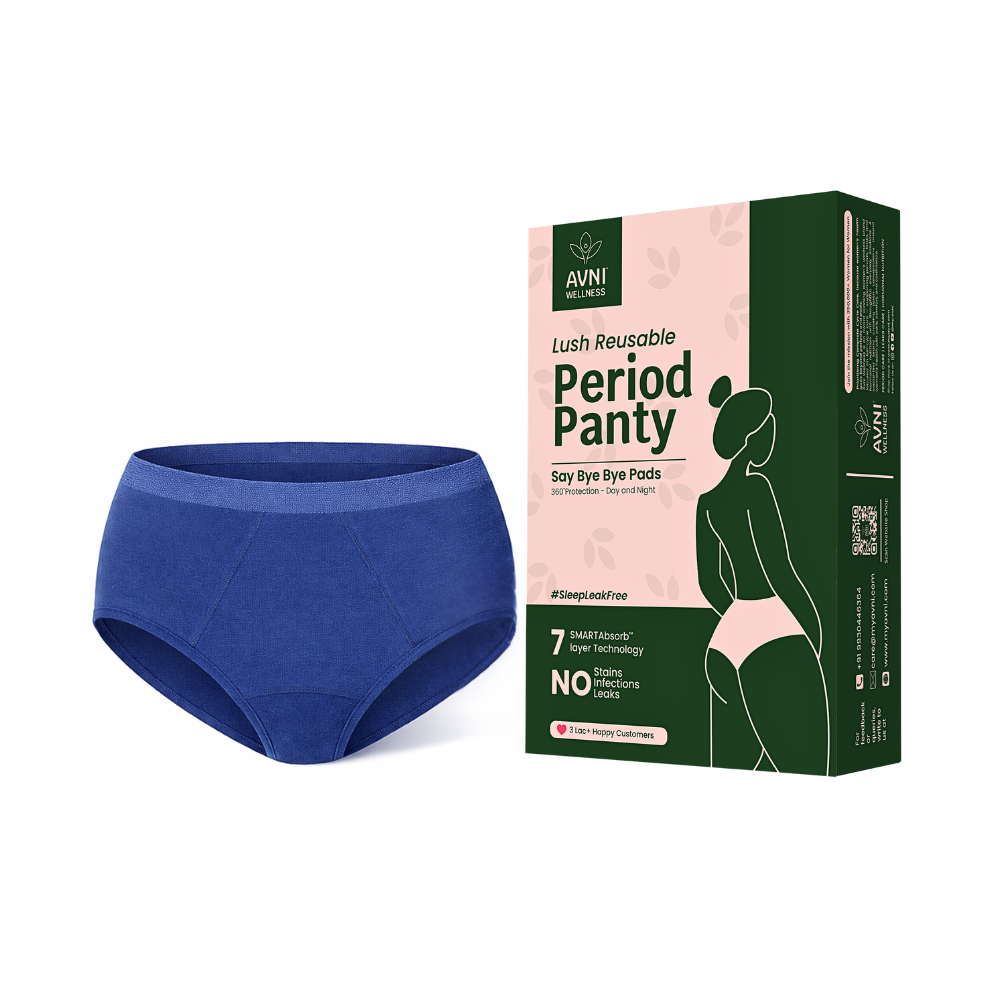
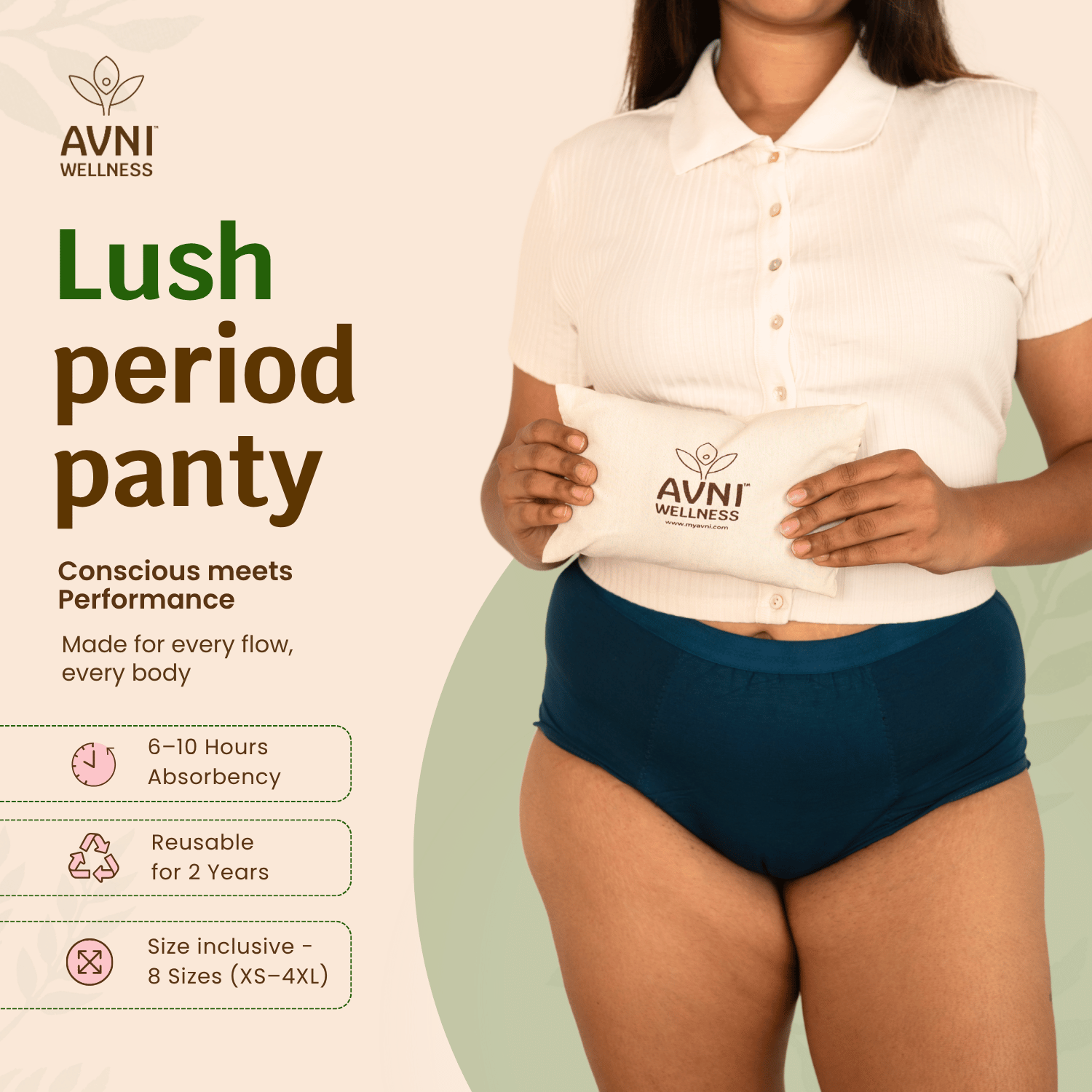
Lush Reusable Period Panty |
|
Reusable external pad protection |
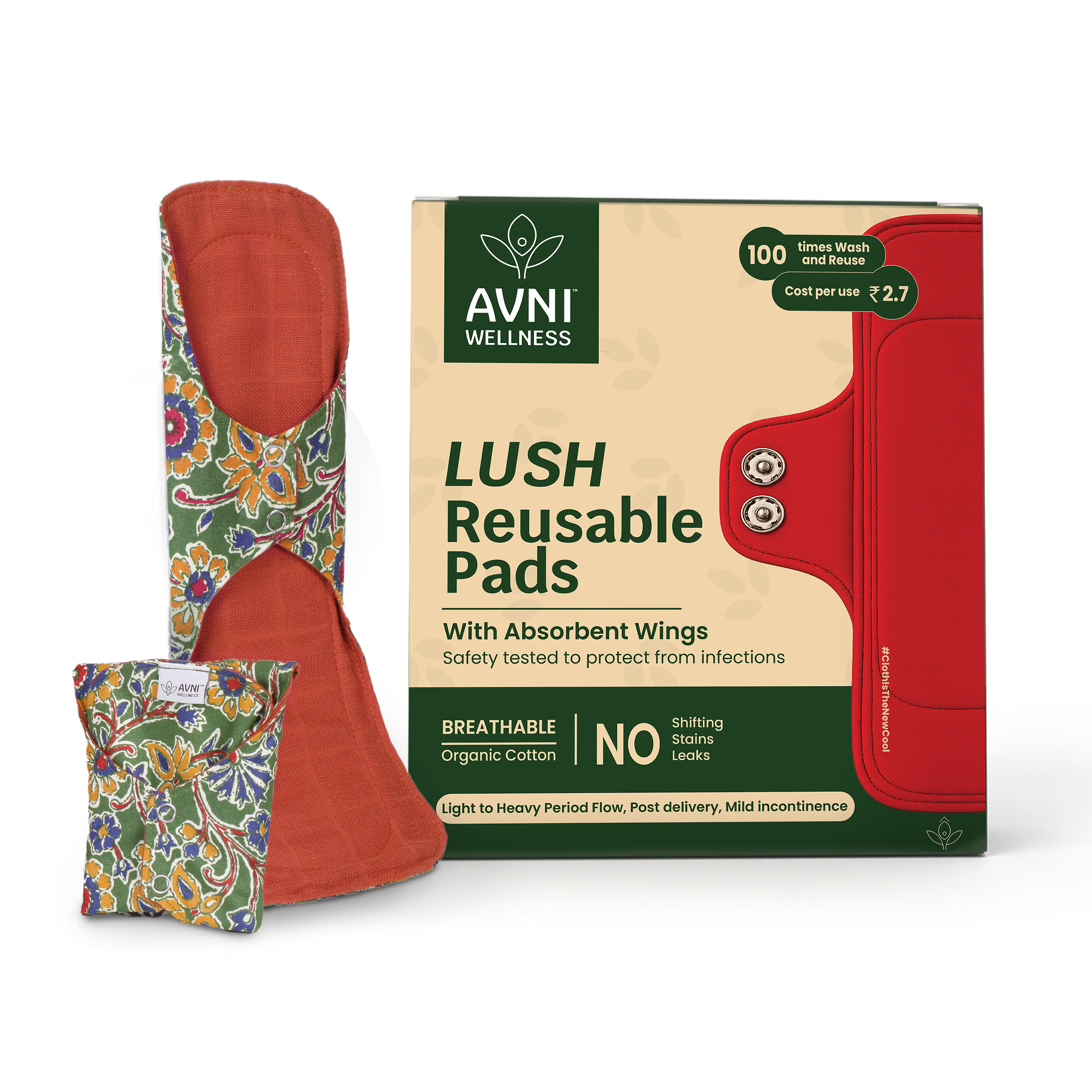
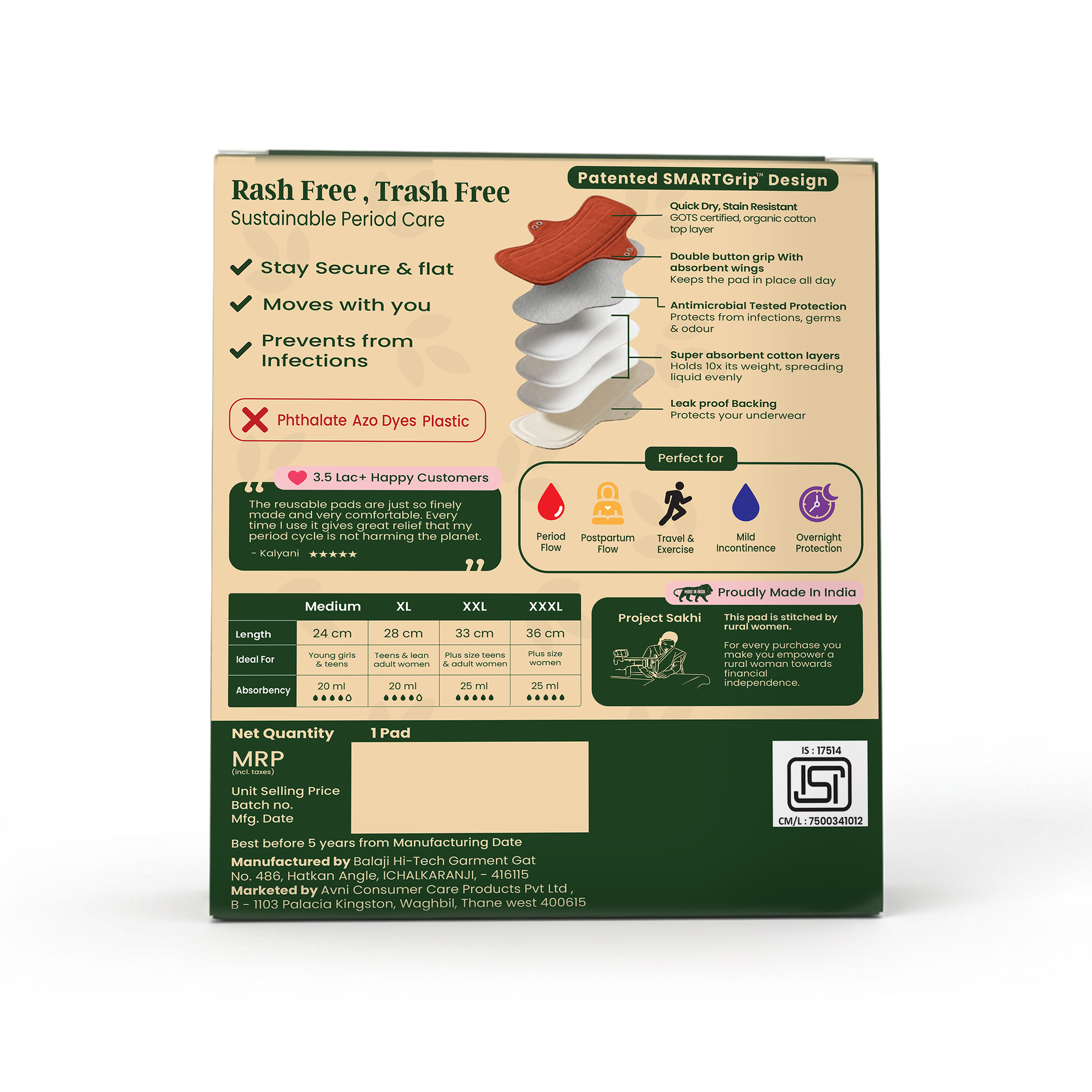
Lush Reusable Cloth Pads |
|
Disposable cotton pad protection |
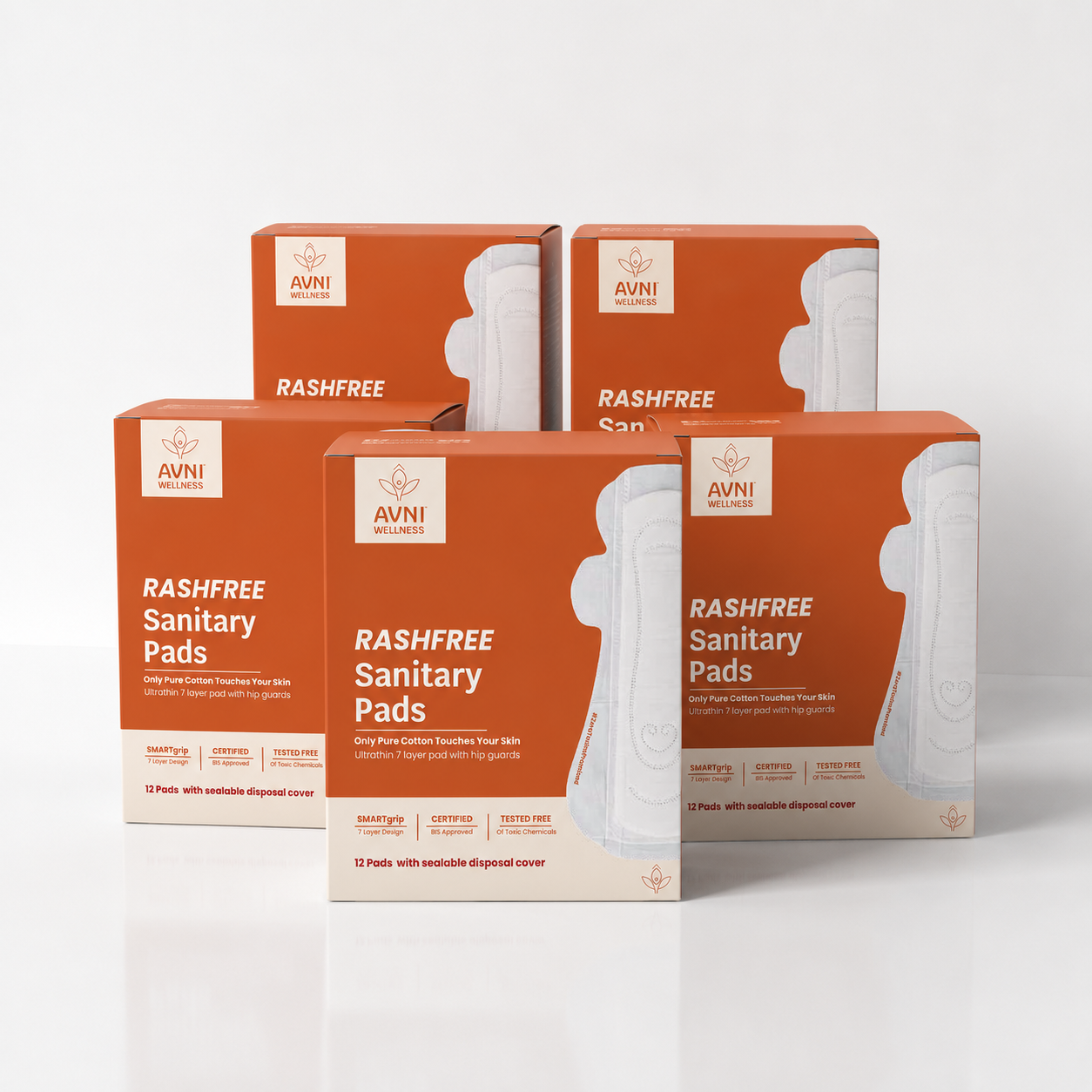
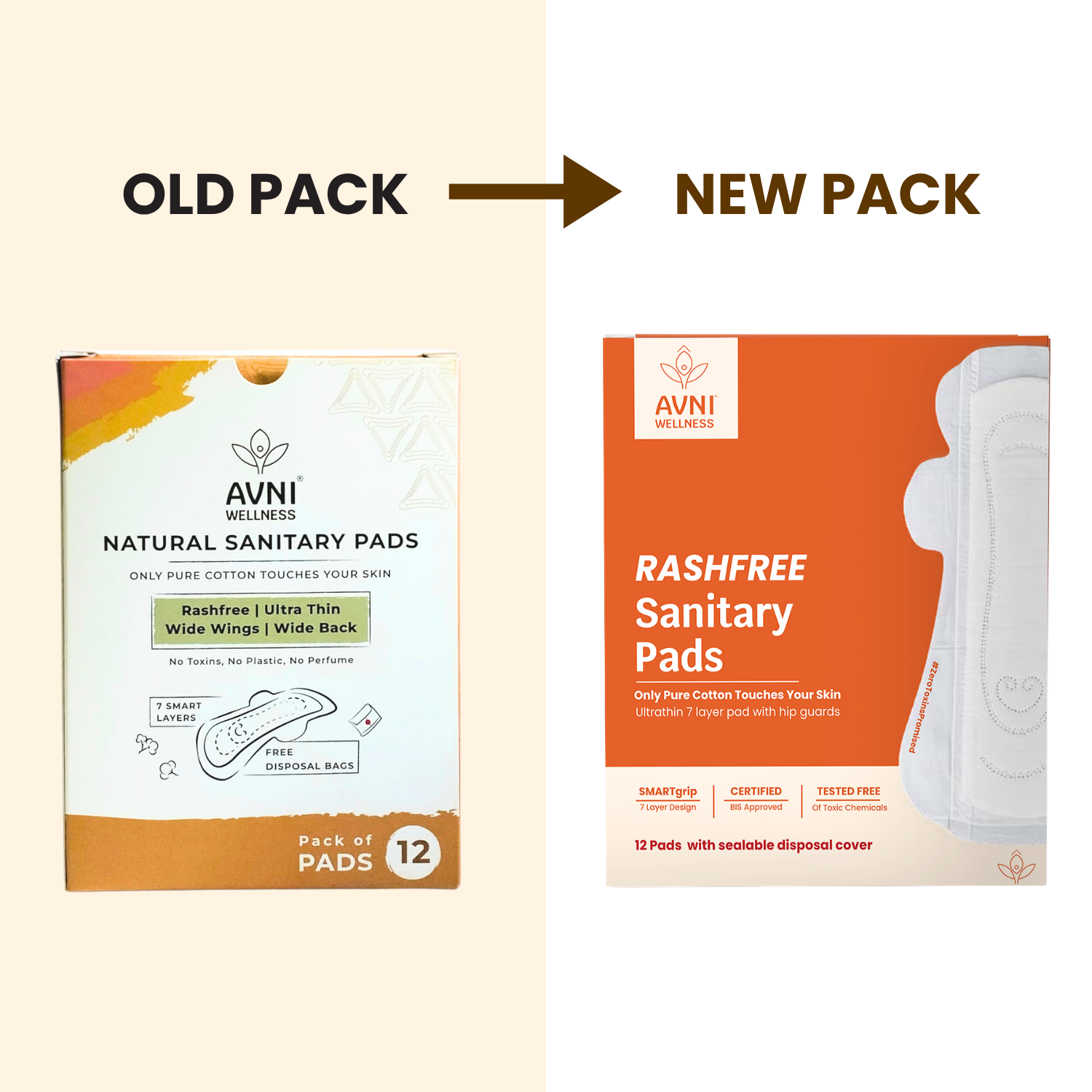
Rashfree Pads |
|
Reusable internal protection |
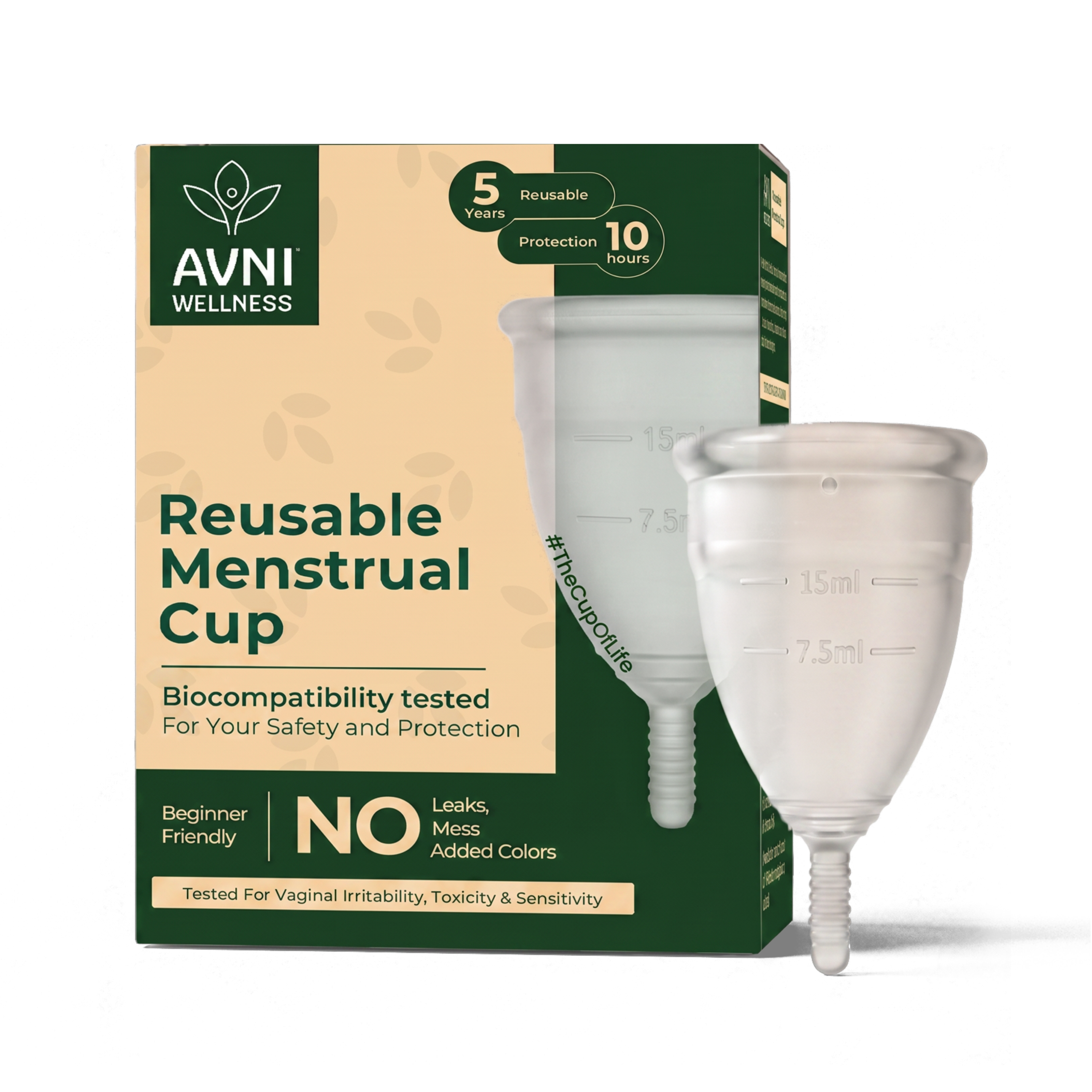
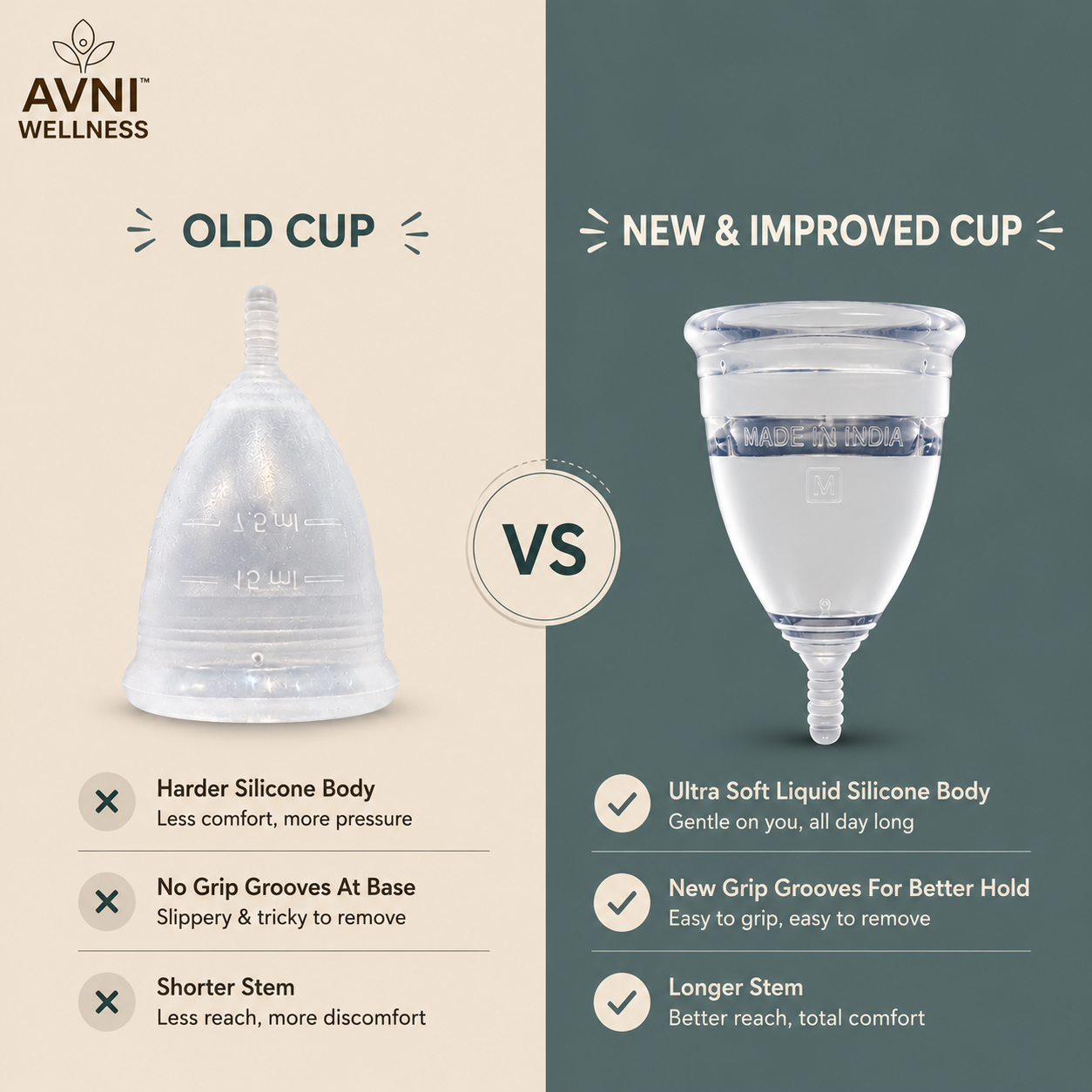
Avni Menstrual Cup |
The important comparison should always be based on the product's documented material, capacity/absorbency, size, coverage, care instructions and intended use.
 View all


Leave a comment
This site is protected by hCaptcha and the hCaptcha Privacy Policy and Terms of Service apply.