
Menstrual Cup Problems Explained: Bladder Pressure, Leaks, Removal Issues & Complete Beginner Guide
A menstrual cup is a reusable period product that sits inside the vagina and collects menstrual flow instead of absorbing it. While it is safe and effective, first-time users often experience confusion around pressure, leakage, urination sensation, and removal.
Why does my menstrual cup make me feel like I have to pee?
A menstrual cup can press against the bladder and create a false urge to urinate.
When users search “menstrual cup makes me feel like I have to pee” or “menstrual cup pressing on bladder”, the issue is almost always related to anatomy and placement.
The bladder sits directly in front of the vagina. If a menstrual cup is inserted too high or tilted forward, it can gently press on the bladder wall. This does not actually fill the bladder, but it sends pressure signals that your brain interprets as a need to pee.
Some users describe this as:
- menstrual cup makes me want to pee
- menstrual cup feels like i have to pee
- menstrual cup makes me feel like i have to pee
This sensation is more common with firmer cups or incorrect positioning.
Fix: Adjust the insertion angle slightly toward the back (tailbone direction). This reduces bladder pressure and usually resolves the issue immediately.
Can you pee with a menstrual cup in?
Yes, you can urinate normally while wearing a menstrual cup.
This is a very common concern among first-time users searching “can you pee with a menstrual cup in”.
The reason is anatomical: urine exits through the urethra, while a menstrual cup sits in the vagina. These are separate systems, so the cup does not block urine flow.
However, if the cup is pressing against the bladder, you may feel like you need to urinate more often. That sensation is pressure-based, not actual urine retention.
Why is there urine in my menstrual cup?
There is no urine in a menstrual cup under normal conditions.
Users often search “why is there urine in my menstrual cup” when they notice watery fluid inside the cup.
In reality, the fluid is almost always:
- Menstrual blood (often diluted during lighter flow)
- Cervical mucus
- Vaginal discharge mixed with blood
Since the urethra and vagina are separate, urine cannot enter the cup. If liquid seems unusually watery, it is typically due to menstrual flow consistency or minor leakage around the cup.
Do menstrual cups make you loose?
No, a menstrual cup does not make the vagina loose.
The vagina is made of elastic muscle tissue that stretches and returns to its natural shape. A menstrual cup is too small and flexible to permanently change vaginal tightness.
Users searching “do menstrual cups make you loose” usually notice that insertion becomes easier over time. This is not physical loosening-it is improved muscle relaxation and familiarity with placement.
Why is my menstrual cup leaking?
Leakage is one of the most common issues users face, often searched as “menstrual cup leaking” or “period cup leaks”.
Leakage usually happens when the cup does not form a proper seal. A menstrual cup works by creating gentle suction against the vaginal walls, and if this seal is incomplete, fluid escapes around the edges.
Common causes include:
- Incorrect size (too small or too large)
- Cup not fully opened inside the vagina
- High or tilted cervix affecting positioning
- Heavy flow filling the cup faster than expected
Fix: Ensure the cup fully opens after insertion. If leaks continue, reassessing size and firmness usually solves the problem.
Why does my menstrual cup leak after pooping?
This happens because bowel movements create internal pressure in the pelvic area.
When you strain during pooping, the pelvic muscles contract and push downward. This can shift the menstrual cup slightly, breaking the seal and causing leakage afterward.
This is not a product defect-it is a normal muscle interaction. Rechecking placement after using the toilet usually prevents this issue.
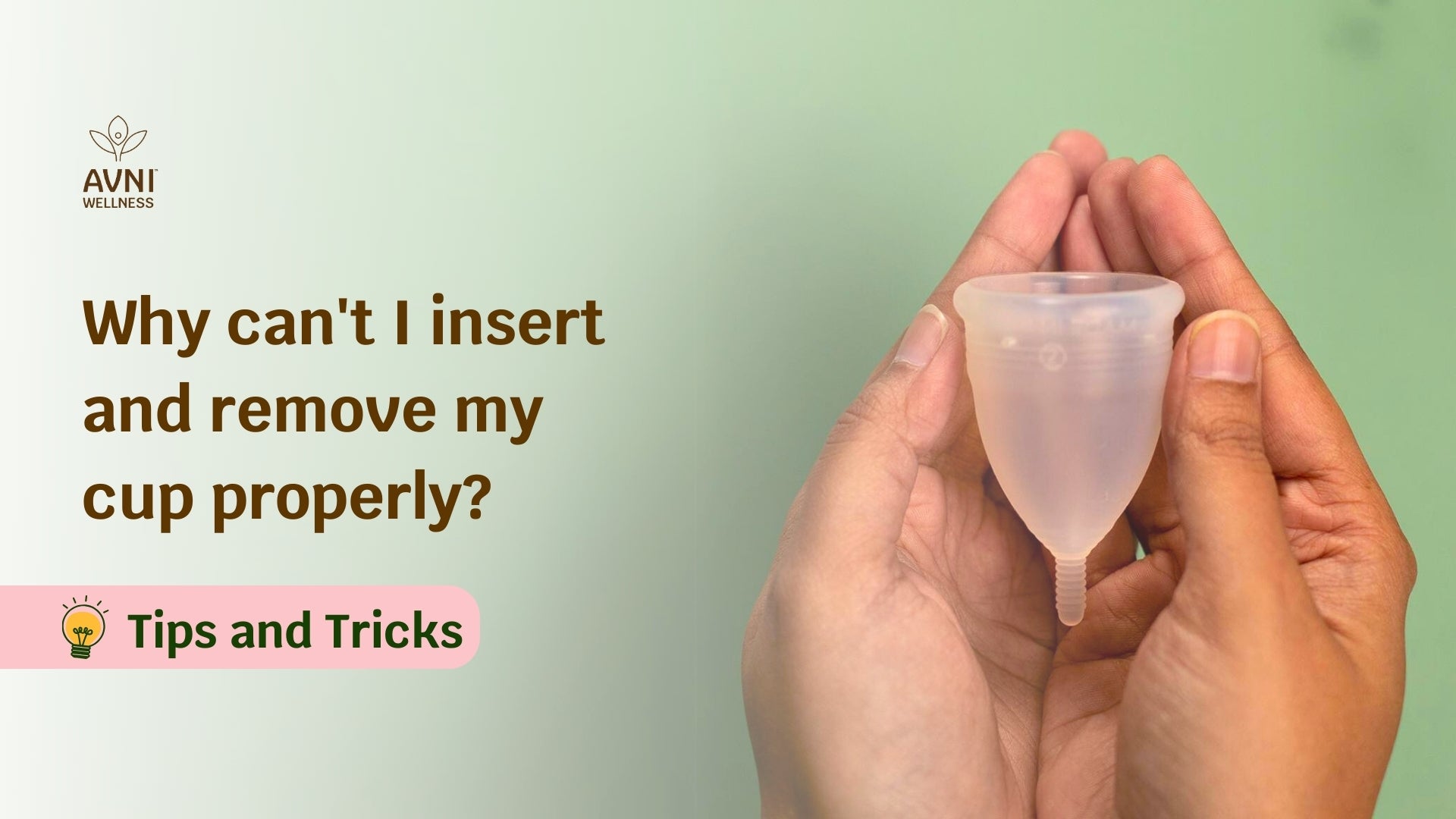
My menstrual cup feels like it is stuck
A common fear among beginners is that the cup is stuck inside the body.
In reality, a menstrual cup cannot get lost because the cervix acts as a natural barrier at the top of the vagina.
The feeling of being “stuck” usually happens when:
- Pelvic muscles are tense
- The cup has moved slightly higher
- The suction seal has not been released yet
To remove it safely, the key is relaxation. Squatting helps lower the cup naturally, and gently bearing down brings it closer so the base can be pinched to break suction.
Why does my menstrual cup spill when I remove it?
Spillage occurs because the cup contains liquid menstrual blood, and tilting it during removal can release the contents.
This is especially common for beginners searching “menstrual cup spilling during removal”.
The cup is working correctly-it simply needs careful handling during removal. Keeping it upright and removing it slowly helps reduce mess significantly.
My menstrual cup is losing its shape
Over time, some users notice their cup becoming slightly oval or bent.
This usually happens due to repeated pressure during insertion or low-quality material. A high-quality medical-grade silicone menstrual cup should retain its shape for years.
If deformation affects comfort or sealing ability, replacing the cup is recommended.
Why is my menstrual cup discoloured?
Discolouration is normal and does not indicate damage.
The vagina has a naturally acidic pH, which can stain silicone over time, causing yellow or brown discoloration.
This is purely cosmetic. As long as the cup has no cracks, tears, or texture changes, it remains safe to use.
I forgot to take out my menstrual cup
If a menstrual cup is left in longer than recommended, there is usually no immediate danger, but it should be removed as soon as possible.
The cup should then be washed and sterilized before reuse.
It is important to avoid vaginal cleansing products or douching, as they disrupt the natural vaginal microbiome and can increase infection risk.
Final Summary
A menstrual cup is a safe, reusable, and eco-friendly period product, but it requires a short learning curve. Most concerns-such as feeling pressure on the bladder, leakage, or removal difficulty-are related to placement technique and muscle response rather than any issue with the product itself.
Once properly adjusted, a menstrual cup often becomes more comfortable and convenient than traditional menstrual products.
Frequently Asked Question:
1. Why does my menstrual cup make me feel like I have to pee and what causes menstrual cup pressing on bladder?
A common concern users search is why a menstrual cup makes me feel like I have to pee or why there is a sensation of menstrual cup pressing on bladder.
This happens because the bladder sits directly in front of the vaginal canal. When a menstrual cup is inserted too high, too forward, or is slightly firm, it can create gentle pressure on the bladder wall. This does not affect urine production, but the brain misinterprets the pressure as a need to urinate.
In well-designed cups with better anatomical shaping and softer medical-grade silicone, this pressure is reduced significantly. Cups designed with comfort-focused material balance tend to sit more naturally in the vaginal canal, reducing bladder interference and helping eliminate that constant urge to pee sensation.
2. Can you pee with a menstrual cup in safely?
Yes, you can safely urinate while wearing a menstrual cup.
This is because urine and menstrual flow come from two different openings in the body. The cup sits in the vagina, while urine exits through the urethra, so there is no physical blockage.
However, discomfort while peeing usually happens when the cup is pressing against the bladder due to incorrect placement or a firmer design. In ergonomically designed menstrual cups with better flexibility, the cup stays in position without creating unnecessary pressure, allowing normal urination without discomfort.
3. Do menstrual cups make you loose or affect vaginal tightness?
No, a menstrual cup does not make you loose or change vaginal tightness.
The vagina is made of elastic muscle tissue that naturally stretches and returns to its original shape. A menstrual cup is too small and flexible to cause any structural change.
Over time, users may feel that insertion becomes easier, but this is due to improved technique, relaxation of pelvic muscles, and familiarity with the product-not any physical loosening.
High-quality medical-grade silicone cups are designed to adapt to the body gently, ensuring comfort without affecting natural muscle tone.
4. Why is my menstrual cup leaking and how can period cup leaks be prevented?
Leakage is one of the most common concerns with a menstrual cup, often searched as period cup leaks.
This usually happens when the cup does not form a proper seal inside the vagina. If the cup is not fully opened, is incorrectly positioned, or does not match cervix height or flow, menstrual fluid can leak around the edges.
Cups with better structural design and flexible rim technology tend to open more reliably and form a stronger seal. When used correctly, they reduce leakage during daily movement, sleep, and physical activity by maintaining proper suction and placement inside the vaginal canal.



Leave a comment
This site is protected by hCaptcha and the hCaptcha Privacy Policy and Terms of Service apply.