Risks of Using Single-Use Panty Liners Every Day (And Why Reusable Liners Are Better)
Panty liners can be a great help for those in tropical areas, dealing with daily vaginal discharge, or wanting to feel fresh all day. They are lightweight, convenient, and easy to use, making them a favorite for everyday hygiene.
However, while panty liners have their benefits, using single-use options daily may not be the healthiest or most sustainable choice. Many people don’t know about the long-term health, environmental, and financial risks that come with disposable panty liners.
In this blog, we’ll look at what panty liners are, the risks of daily use of disposable panty liners, and why reusable liners are a smarter choice.
What Are Panty Liners?
Panty liners are thin, lightweight versions of regular sanitary pads. They are meant to absorb light vaginal discharge, spotting, or period blood during the last days of menstruation. People commonly use panty liners for: -
- Daily vaginal discharge
- Spotting before or after periods
- Backup protection with menstrual cups or tampons
- Staying fresh in hot and humid weather
Unlike regular sanitary pads, panty liners don't absorb much and are not suitable for heavy flows. While they are convenient, using disposable panty liners every day can come with hidden risks.
The Problem with Using Single-Use Panty Liners
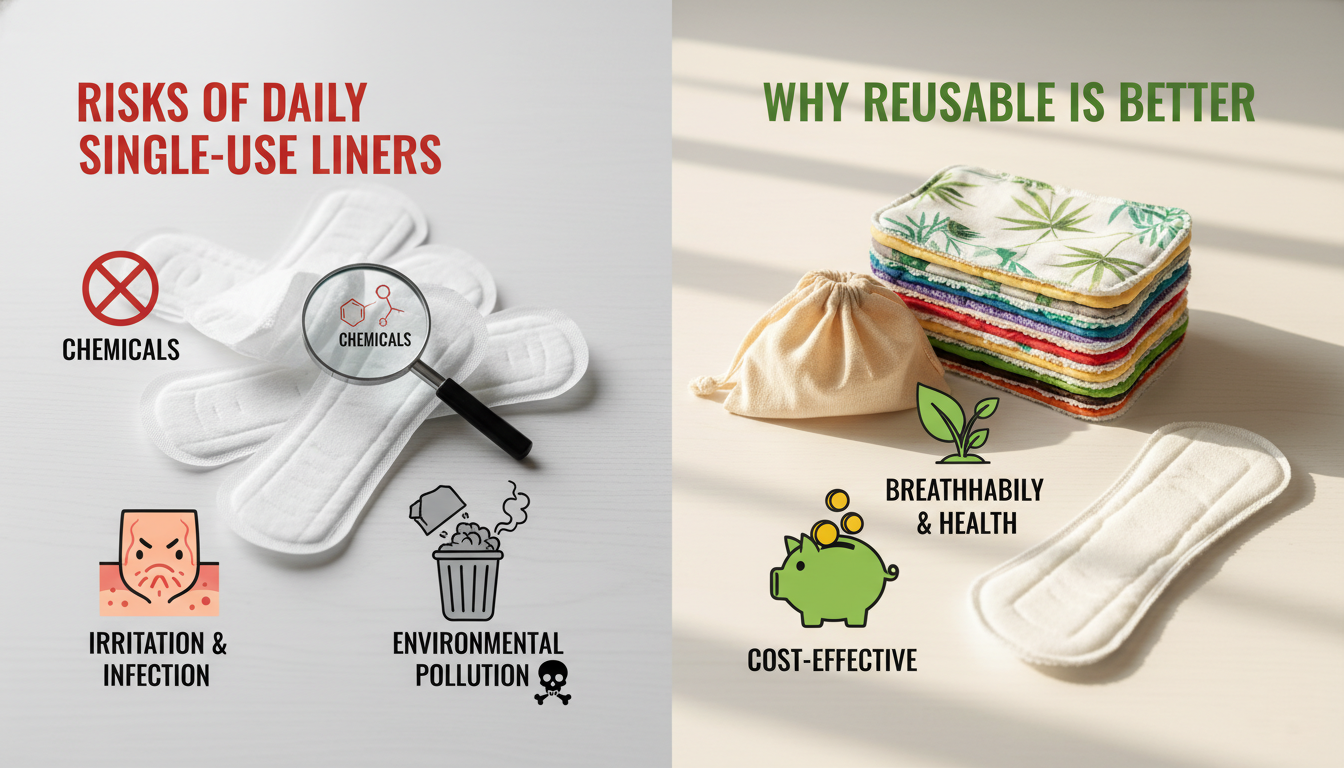
Daily Disposable panty liners are only meant for one-time use. Wearing them for long periods or using them multiple times a day can lead to health issues, environmental problems, and higher costs.
1. Increased Risk of Bacterial Infections and Irritation
Bacterial infections can be uncomfortable and affect your daily life. They often cause itching, burning, and pain, which can harm your productivity and mental health.
If you wear single-use panty liners daily, especially during long hours like a 9-to-5 job, the liner can become soaked with discharge and sweat. Since disposable liners are thin and often made from synthetic materials, they trap moisture and heat.
This creates a breeding ground for bacteria and yeast.
Additionally, many disposable panty liners contain: -
- Fragrances
- Adhesives
- Synthetic fibers
- Chemicals and dyes
These can irritate sensitive vaginal skin and increase the risk of:
- Rashes
- Itching
- Allergic reactions
- Vaginal infections
Constant exposure to moisture throughout the day can make irritation and discomfort worse.
2. Excessive Waste Generation
Most disposable panty liners aren’t very absorbent. This means users often change them multiple times a day to stay fresh. While this seems hygienic, it leads to excessive product use and waste.
Using 3 to 5 panty liners daily adds up—over 1,000 liners a year per person. This creates a lot of waste, especially since millions of people use them around the world.
This is not only harmful to the environment but also costly for users.
3. Non-Sustainability and Environmental Pollution
Disposable panty liners are usually made from plastic-based materials and synthetic fibers that don’t break down. These products can take hundreds of years to decompose in landfills.
Additionally, chemicals from disposable liners can leak into the soil and water, causing: -
- Soil pollution
- Water contamination
- Reduced soil fertility
In a world dealing with a plastic crisis, single-use period products add to environmental harm.
4. Hassle of Regular Changing
Not changing your panty liner regularly puts you at risk for infections and irritation. However, changing them often can be inconvenient and impractical.
You have to: -
- Carry extra liners
- Dispose of them discreetly
- Manage waste while traveling or at work
This daily hassle can be stressful, especially during long workdays or travel.
5. Expensive in the Long Run
Disposable panty liners may seem cheap, but daily use adds up fast. Buying packs every month can become costly over time.
When you add up yearly expenses, disposable liners can end up being much more expensive than reusable options. It’s a constant expense that never stops.
Reusable Panty Liners to the Rescue
Reusable panty liners are a healthier and more sustainable alternative. They are becoming popular with people who care about their health, comfort, and the environment.
Here’s why reusable panty liners are a better choice:
1. Greater Absorption Capacity
Reusable panty liners have multiple layers, providing better absorption than thin disposable liners. They keep you dry and comfortable for longer.
2. Chemical-Free and Organic
Most reusable panty liners use natural materials like organic cotton or bamboo. They’re free from harmful chemicals, fragrances, and dyes, making them safe for sensitive skin. This lowers the risk of: -
- Irritation
- Rashes
- Allergic reactions
- Infections
3. Sustainable and Eco-Friendly
Reusable panty liners can be washed and used multiple times, greatly cutting down on waste. Switching to reusable liners helps lessen landfill waste and plastic pollution. It's a small step toward a greener planet.
4. Economical and Cost-Effective
While reusable panty liners may cost more upfront, they save money in the long run. You don’t need to buy liners every month, making them a one-time investment that lasts for years.
5. Gentle on Sensitive Skin
Cloth-based liners are soft, breathable, and non-abrasive. They reduce friction and chafing, making them perfect for daily use.
6. Longer Wear Time
Reusable panty liners offer better breathability and absorption, allowing for longer use. However, they still need to be changed and washed regularly for hygiene.
Single-Use vs Reusable Panty Liners: Which Should You Choose?
Single-use panty liners work well for travel, emergencies, and short-term needs. They are lightweight and easy to dispose of, making them suitable for occasional use.
However, for daily wear, reusable panty liners are a healthier, more sustainable, and cost-effective option.
They help protect your vaginal health, reduce waste, and save money over time.
Make the Right Choice for Your Body and the Planet
Your vaginal health is important, and the products you use daily impact it significantly. While disposable panty liners offer convenience, they come with hidden risks such as chemical exposure, infections, environmental harm, and ongoing costs.
Reusable panty liners provide a healthier and eco-friendly option that benefits both your body and the planet.
Consider trying reusable panty liners to experience the difference in comfort, health, and sustainability.
FREQUENTLY ASKES QUESTION:
1. Can using panty liners every day cause infections?
Yes, using single-use panty liners daily can increase the risk of bacterial or yeast infections. They can trap moisture and heat, especially when worn for long hours, creating an ideal environment for bacteria to grow. Fragrances and chemicals in disposable liners may also irritate sensitive skin.
2. Are reusable panty liners safe and hygienic?
Yes, reusable panty liners are safe and hygienic when washed properly with mild detergent and dried thoroughly. They are usually made from breathable fabrics like cotton or bamboo, which reduces irritation and keeps the area dry and comfortable.
3. How often should panty liners be changed?
Panty liners should be changed every 4–6 hours or whenever they feel damp. Reusable panty liners can be worn longer than disposable ones due to better absorption, but they should still be changed regularly to maintain hygiene and prevent irritation.


Leave a comment
This site is protected by hCaptcha and the hCaptcha Privacy Policy and Terms of Service apply.